


 Best seller
 Trending


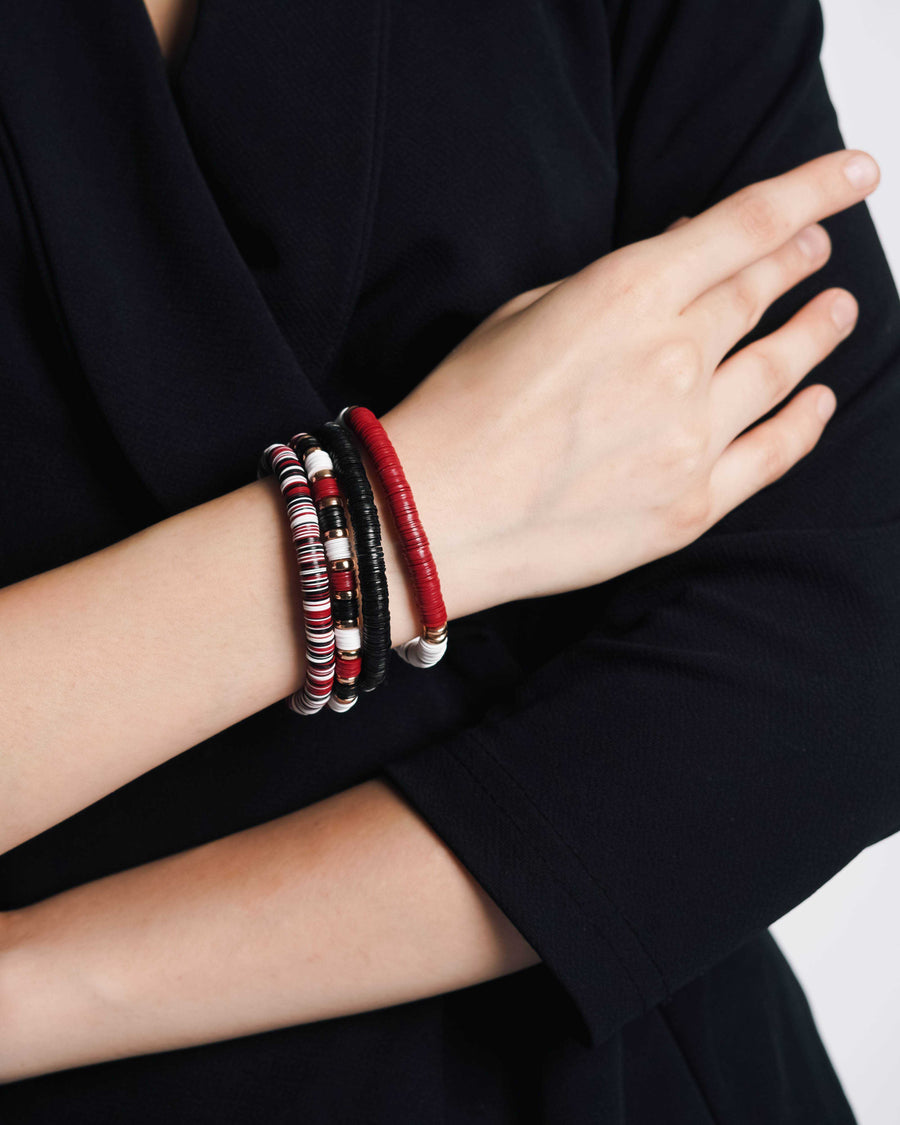
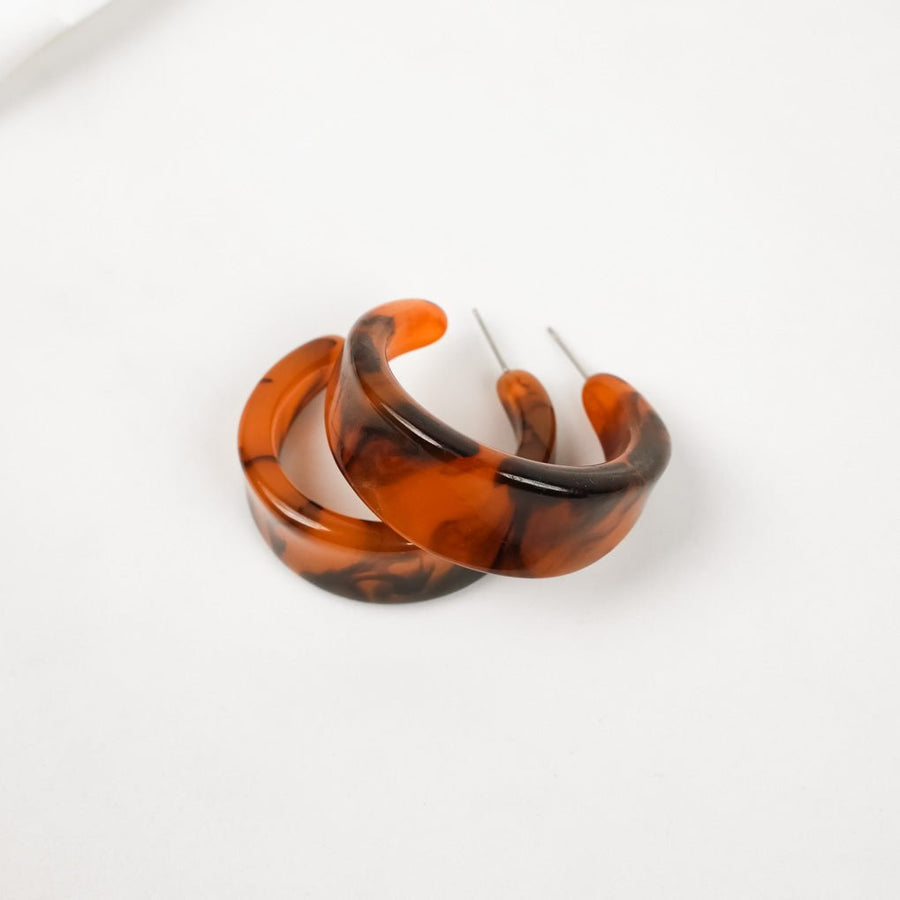






Hashtack JournalAnti Tarnish Jewellery
Why Does Jewellery Turn Your Skin Green? Brass, Resin and Wood Compared
In this article17
Green marks come from copper reacting with sweat, soap and lotion. Here is which materials do it, five ways to stop it, and what to wear instead.
Updated 2 November 2026. Written by the Hashtack team, a Noida-based jewellery and accessories brand.
Why does jewellery turn skin green? Because of copper. Brass, "gold tone" alloys and many plated pieces have copper in them or under them, and sweat, soap and lotion make that copper react. The reaction leaves a green film on your skin. It looks alarming but it isn't dangerous, and it washes off.
We sell brass jewellery, so we'll be blunt: brass can do this. So can plenty of other cheap metal. Resin, wood and stainless steel behave very differently, and that difference is what this guide is about.
Below you'll find which materials mark skin and which don't, why summer makes it worse, how to stop it, and what we'd buy if green fingers put you off.
Quick Answer
Jewellery turns skin green when copper in the metal reacts with sweat, soap or lotion and leaves a green film on your skin. It is a surface stain, not an injury, and it usually washes off within a few days.
Here is the short version.
- The cause: copper. Brass is an alloy of copper and zinc, and many "gold tone" or plated pieces have copper underneath. Reviewed calls hidden copper the most common reason.
- The trigger: sweat, heat, humidity, and the lotions, soaps and sanitisers on your skin. That is why the same ring can mark you on a hot Tuesday and leave you alone on a cool Saturday.
- Is it harmful? Genesis HealthCare System, quoting Nebraska Medicine, says it isn't dangerous. It is not the same thing as a metal allergy.
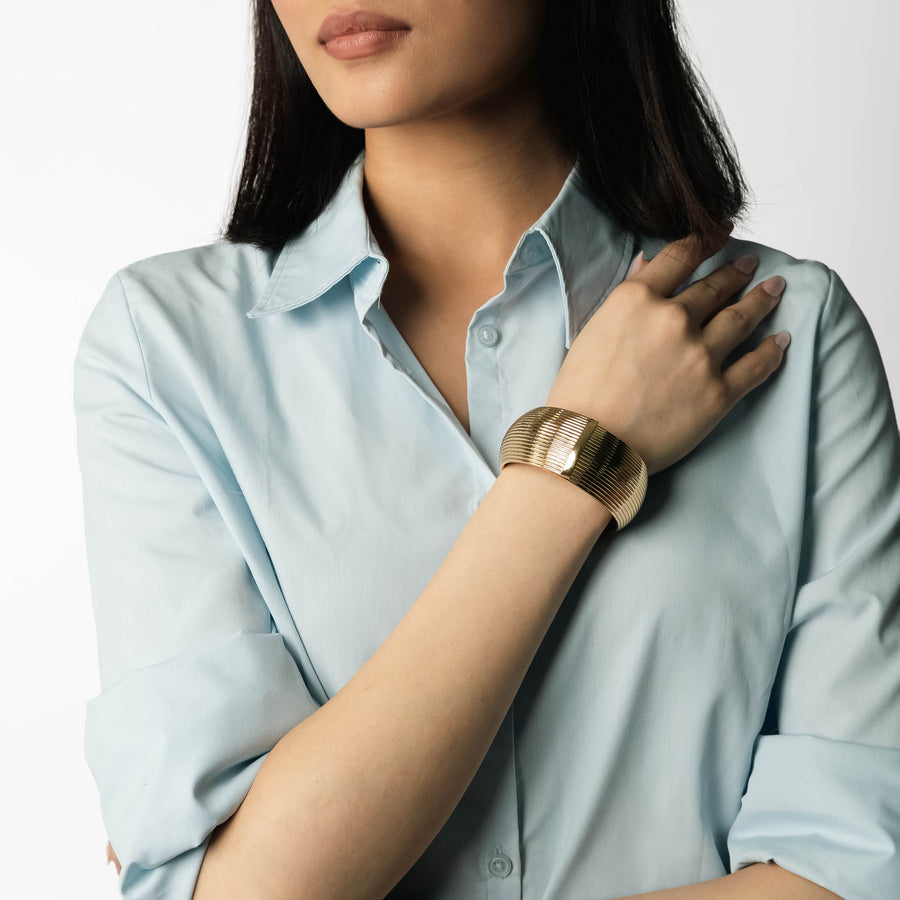
- Brass: the most likely to mark skin, especially once its coating wears. Ours carry a protective lacquer, but brass is not anti-tarnish and it will darken.
- Gold-tone plated pieces: they can mark skin when the plating thins over a copper alloy.
- Stainless steel: an iron alloy with no copper to react, so it is far less likely to leave a mark. The colour layer can still wear where it rubs.
- Resin and wood: no exposed metal on the bangle, so nothing to turn green. Watch any metal clasp or hook.
- What helps: put on perfume and lotion first and let them dry, wipe your pieces after a sweaty day, store them dry, and skip brass on the hottest days.
- If your skin itches, blisters or the rash keeps returning, that points to an allergy, not a green stain. See a dermatologist.
So green skin is about the metal under the shine. Choose resin, wood or stainless steel for daily wear, keep brass for days you aren't sweating, and you will see far fewer stains.
Contents
- Why does jewellery turn your skin green?
- Is green skin from jewellery harmful?
- Why does brass jewellery turn your skin green?
- Why does some jewellery turn skin green more in summer?
- Does gold-tone jewellery turn skin green?
- Does stainless steel turn skin green?
- Does resin or wooden jewellery turn skin green?
- Is green skin the same as a metal allergy?
- How do you stop jewellery turning your skin green?
- How do you remove the green off your skin?
- Brass, steel, resin or wood: which should you buy?
- What would we skip?
- Our picks, with prices
- Why does jewellery turn skin green: FAQs
Why Does Jewellery Turn Your Skin Green?
Copper reacts with what is on your skin and turns green. It's the same chemistry that turns old copper roofs and statues green.
Reviewed's guide explains that the minerals in sweat can react with copper in your jewellery and move the green tint onto your skin. Soaps, lotions and sanitisers can do the same. Costume pieces labelled as nickel, and even some silver- or gold-plated ones, often contain copper or copper alloys.
That is why two people can wear the same ring and only one gets a green finger. It depends on their sweat, the products on their skin, and how snugly the piece sits. Our own anti-tarnish jewellery guide goes deeper into the chemistry of tarnish.
Is Green Skin From Jewellery Harmful?
No. Genesis HealthCare System, quoting Nebraska Medicine, says the reaction between the metal and the sweat on your skin is not dangerous. The mark fades on its own.
Our anti-tarnish guide also cites a jewellery-metals supplier, Halstead, who says the same: not dangerous, and gone within days. We'd add one caution. A green mark and an itchy, red or blistering rash are two different problems, and the second one is worth a doctor's time. More on that below.
Why Does Brass Jewellery Turn Your Skin Green?
Brass is made of copper and zinc, and the copper does the damage. Britannica Kids defines brass as any alloy of copper and zinc.
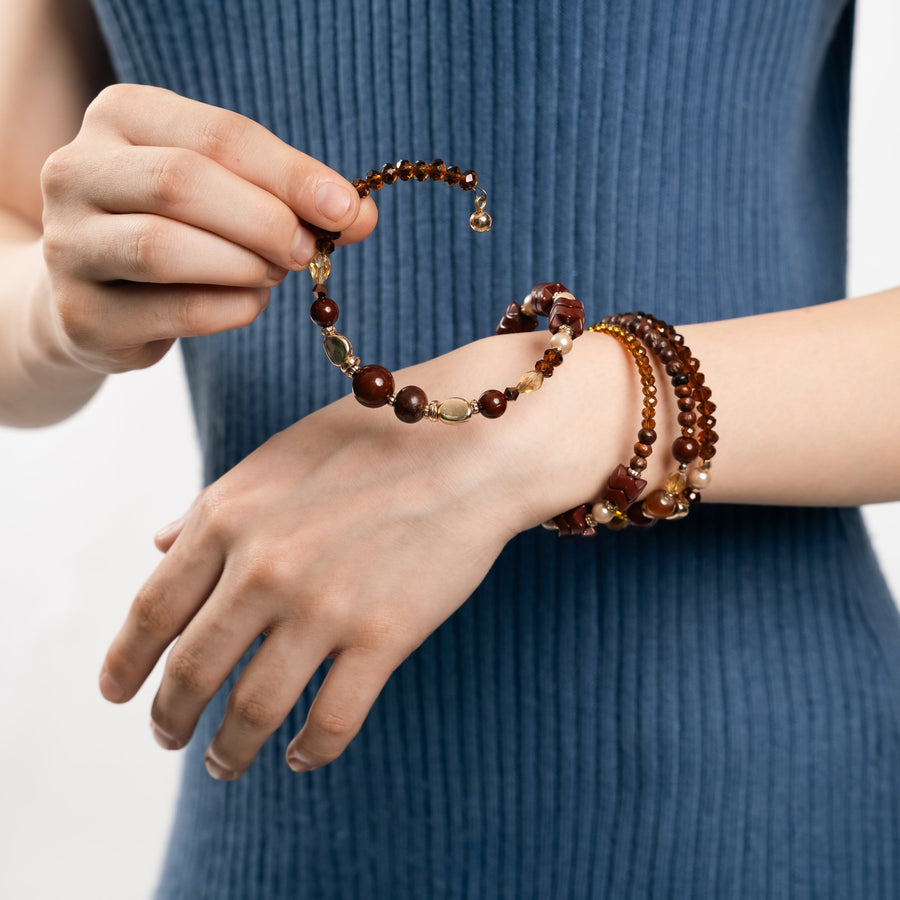
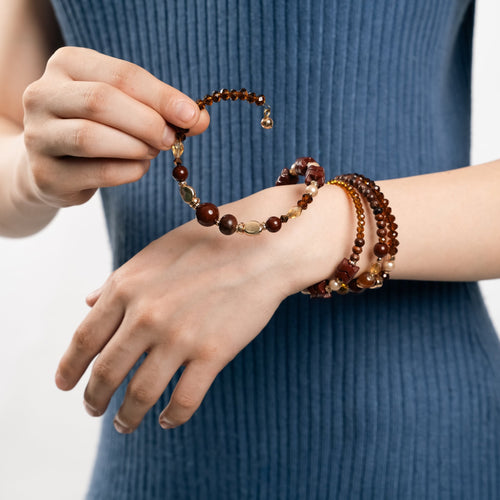
Here's the honest part. Our brass collection page says brass may lose its shine if it gets wet, sweaty or smells strongly. Our FAQ says we apply a protective lacquer coating over the finish on our brass to slow discoloration. A lacquer slows things down. It doesn't stop them.
Once the coating breaks, brass darkens like any other brass. As our anti-tarnish guide notes, coated brass usually starts marking on the inside of the band, where the piece rubs against skin.
That's not a defect. It's what brass does. If you love the warm colour, as we do, treat it as a piece for dry days and wipe it after wearing.
Why Does Some Jewellery Turn Skin Green More in Summer?
Heat and humidity speed everything up. You sweat more, the metal stays damp against your skin, and the reaction has more to work with.
Reviewed's guide points out that the reaction shows up more in summer and after workouts. The Canadian Conservation Institute, as quoted in our anti-tarnish guide, notes that above about 65% relative humidity a metal surface behaves as if it were wet. Monsoon weeks in Noida are the obvious test.
So the same brass cuff that behaved in February may mark you in the monsoon. Don't blame yourself. Switch material for the season, or take it off when you're sweating.
Does Gold-Tone Jewellery Turn Skin Green?
It can. A thin gold-tone layer over copper or a copper alloy lets the base metal through once the layer wears. Reviewed notes that even gold- or silver-plated costume pieces often contain copper.
The colour on top and the metal underneath are separate things. "Gold-tone" tells you about the look, not about what happens when the layer rubs off at the clasp, the inner band or the ring's palm side.
Ask what the base metal is. If a listing doesn't say, assume it's a coated alloy and expect it to darken eventually. Our anti-tarnish jewellery collection and full jewellery range list materials where we know them.
Does Stainless Steel Turn Skin Green?
Rarely. Stainless steel is an iron alloy, and the green mark comes from copper, so there's much less for sweat to react with.
It isn't magic. The colour layer on a golden-colour piece can wear where it rubs, and we don't offer a colour warranty. But what you see underneath is steel, not a copper alloy. That's why we'd point daily-wear shoppers to the stainless steel collection, such as the Glossy Heart Adjustable Ring or Golden Tide Statement Earrings.
Our FAQ lists earring posts as nickel-free stainless steel. We can't test your skin, so if you have a diagnosed metal allergy, check with your dermatologist before buying any jewellery.
Does Resin or Wooden Jewellery Turn Skin Green?
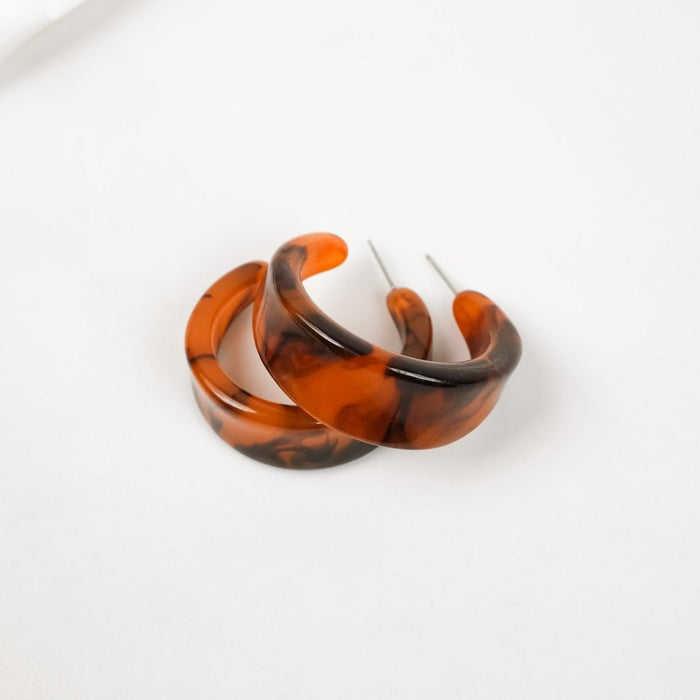
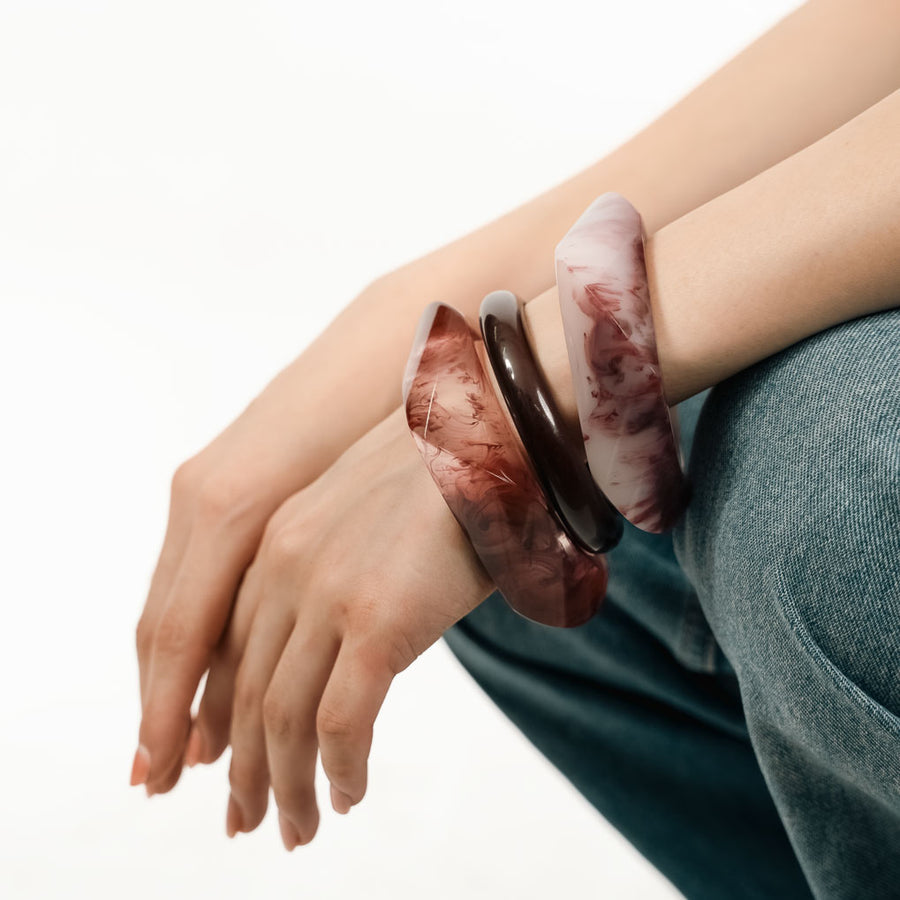
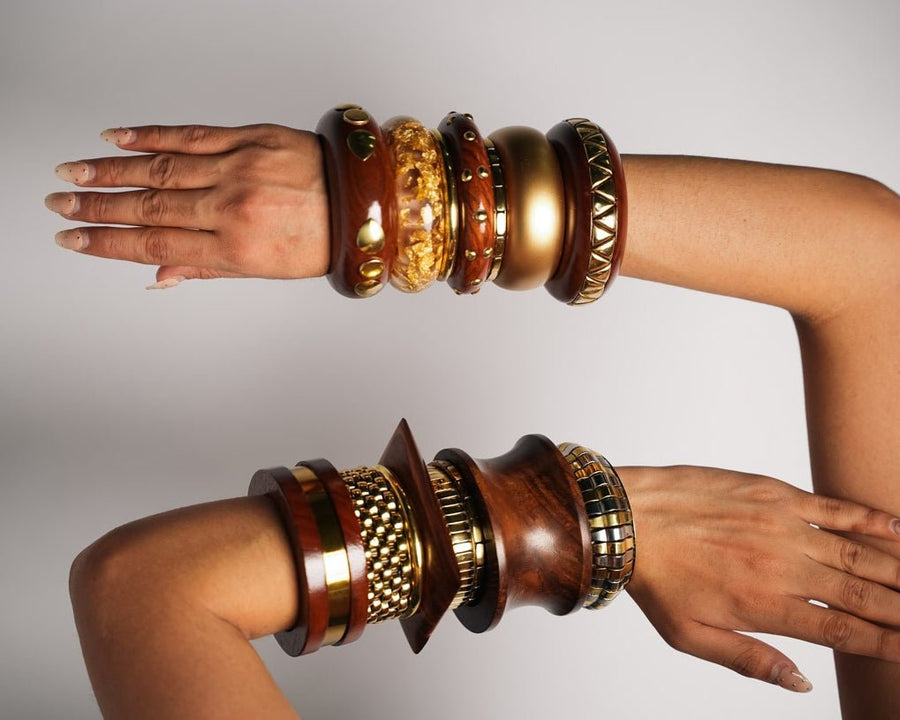
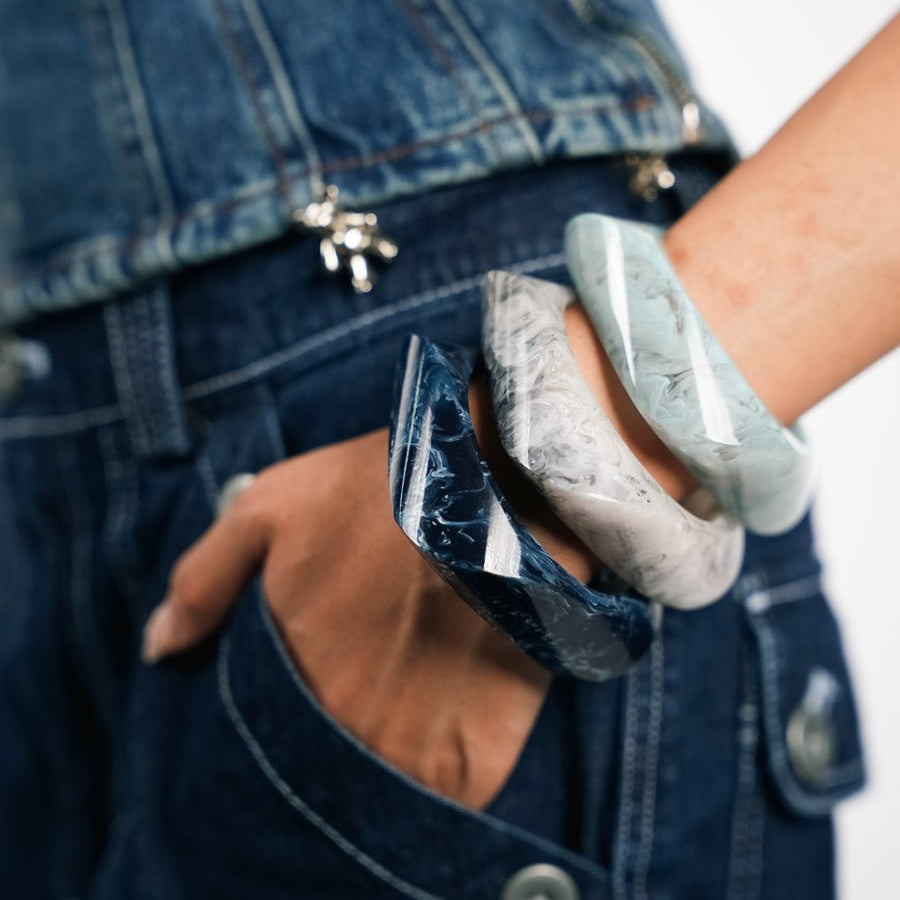
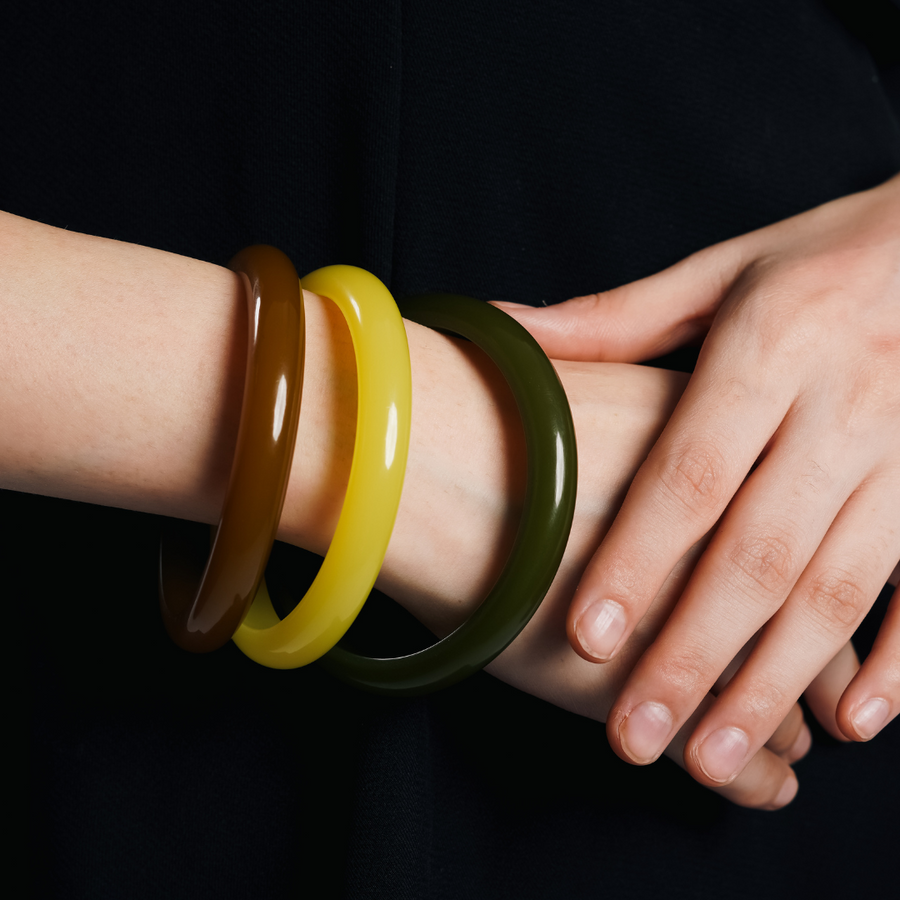
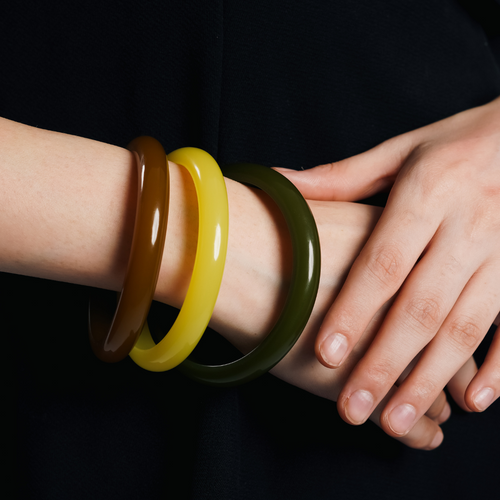
A resin or wooden bangle has no exposed metal to react, so there's nothing on the bangle to turn green. That's the simplest answer.
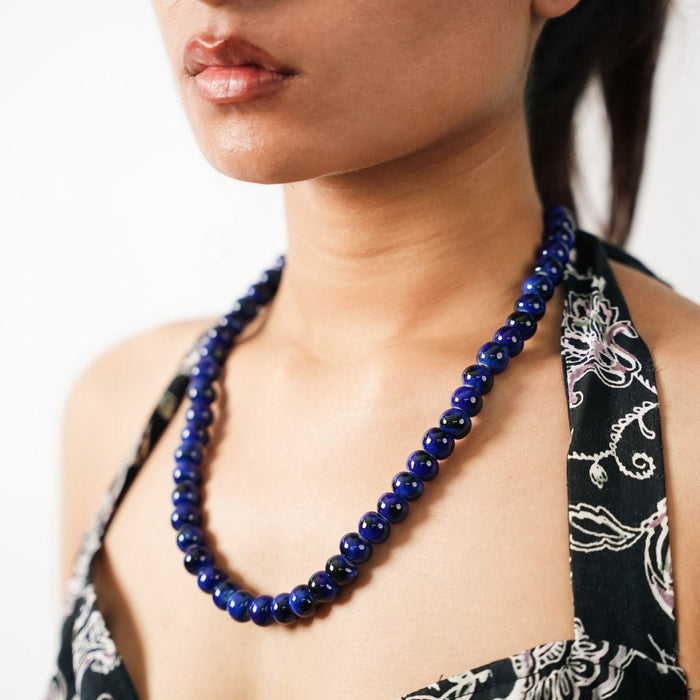
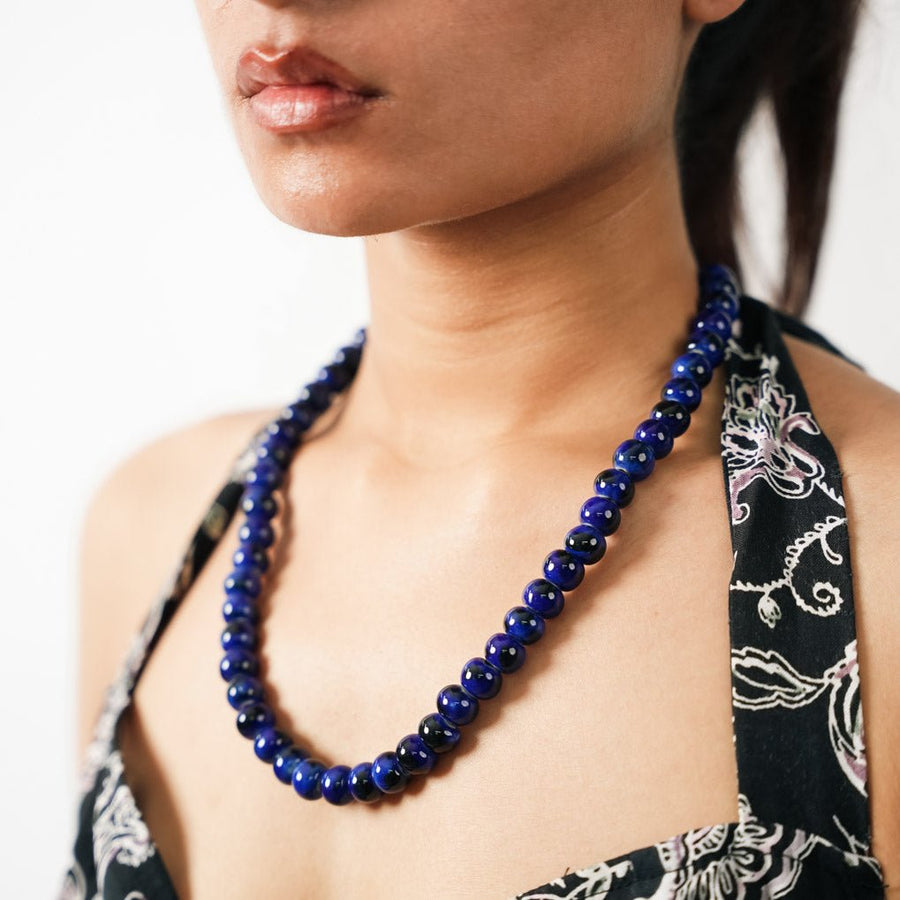
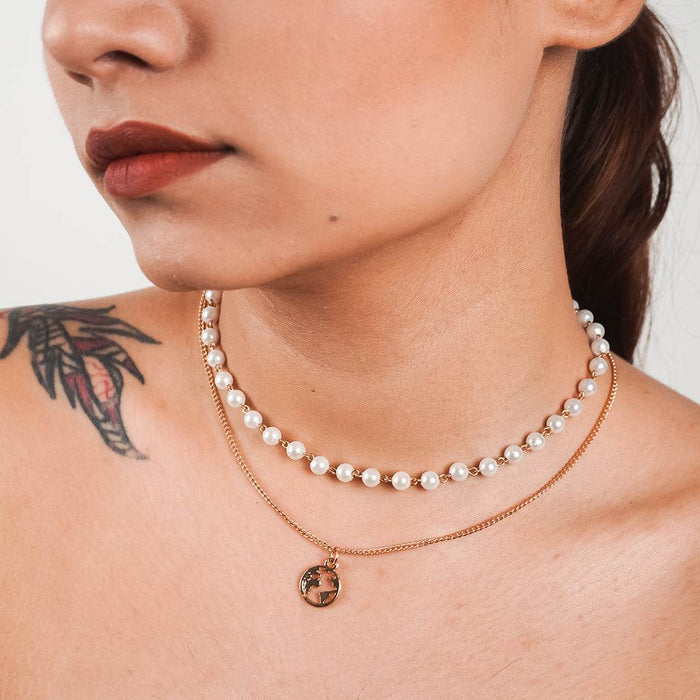
The weak point is hardware. The Sapphire Tide Necklace, for example, is resin beads with alloy hardware, so the beads are safe but the clasp and extension chain are metal. Our care advice in the handmade jewellery care guide applies to those parts.
For bangles, take a look at our resin bangles and wooden bangles. Our guides to what resin bangles are and the wooden bangles complete guide explain how they're made.
Is Green Skin the Same as a Metal Allergy?
No. Green skin is a stain from copper. An allergy is your immune system reacting, usually to nickel, and it shows up as itching, redness or a rash.
The American Academy of Dermatology, in a release carried by Newswise, says earrings, earring backs and watches are among the biggest sources of nickel exposure. It advises choosing jewellery carefully and seeing a board-certified dermatologist for a rash that blisters, becomes infected or keeps coming and going.
We're a jewellery brand, not doctors. If you only get a green mark and nothing else, it's a stain. If you get itching, take the piece off and speak to a professional.
How Do You Stop Jewellery Turning Your Skin Green?
Keep the metal dry and keep products off it. That covers most of it.
- Put on perfume, sunscreen and lotion first and let them dry, then wear the jewellery.
- Wipe each piece with a soft dry cloth after wearing it, especially after a sweaty commute.
- Store it dry and apart from other pieces, in a pouch rather than a damp drawer.
- Skip brass, and any piece you aren't sure about, on the hottest days and during workouts.
- Remove rings before you wash your hands or the dishes.
Reviewed also suggests painting the inside of a piece with clear nail polish as a barrier. We'd treat that as a stopgap. The American Academy of Dermatology release notes that clear nail polish used as a barrier needs re-applying often, so polish on a ring band isn't a long-term fix.
How Do You Remove the Green Off Your Skin?
Wash with soap and water. The mark is a surface film and usually fades within days even if you do nothing.
Our anti-tarnish guide cites Halstead on that point. Don't scrub hard, and don't reach for harsh chemicals on skin. If the area is red, sore or swollen, that isn't just a stain.
Brass, Steel, Resin or Wood: Which Should You Buy?
It depends on how much you sweat and how much upkeep you'll tolerate. Here's how we'd sort them.
| Material | Why it can mark skin | Our honest take |
|---|---|---|
| Brass | Copper in the alloy; the coating wears | Beautiful and warm, but it will darken. Dry days only. |
| Stainless steel | No copper in the steel; the colour layer can wear | Our pick for daily rings and hoops |
| Resin | No exposed metal on bangles; check any hardware | Easy and colourful for bangles |
| Wood | No exposed metal; grain varies | Quiet, earthy, handmade |
| Unknown "gold tone" alloy | Base metal not stated | Assume it can mark, and ask first |
Our dainty jewellery quality guide shows how to check any listing before you buy, and dainty bracelets are a good place to apply it.
What Would We Skip?
We'd skip any piece that won't name its base metal. A listing that says only "gold tone" or "anti-tarnish" tells you almost nothing.
We'd skip wearing brass in a sweaty gym session or a long monsoon commute. We'd skip clear nail polish as a permanent plan. And we'd skip trusting "waterproof" on any jewellery. Take pieces off before swimming or a long bath.
One opinion we'll stand by: if you get green marks more than once a month, stop collecting more brass and move your daily wear to steel, resin or wood.
Our Picks, With Prices
Prices below were what the site listed on 2 November 2026. They can change, so check the product page.
| Piece | Material (as listed) | Price |
|---|---|---|
| Glossy Heart Adjustable Ring | Stainless steel collection | ₹419 |
| Crossline Shine Adjustable Ring | Stainless steel collection | ₹419 |
| Timeless Wide Gold Adjustable Ring | Stainless steel collection | ₹449 |
| Golden Tide Statement Earrings | Stainless steel collection | ₹419 |
| Auric Drift Textured Stud Earrings | Stainless steel collection | ₹429 |
| Monochrome Muse Statement Drop Earrings | Stainless steel collection | ₹439 |
| Sleek Resin Bangles | Resin | ₹549 |
| Amara Bold Bangles | Resin | ₹699 |
| Ocean Mist Sculpted Resin Bangles | Resin | ₹899 |
| Sapphire Tide Necklace | Resin beads, alloy hardware | ₹399 |
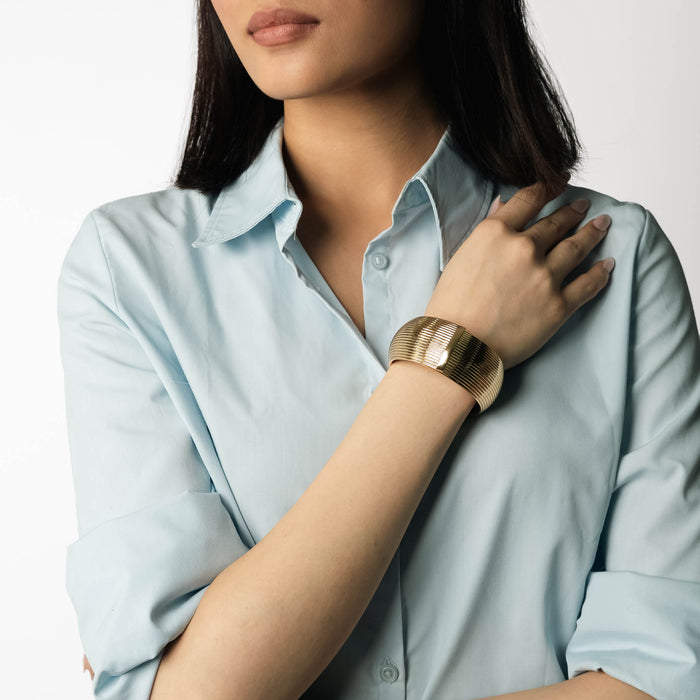
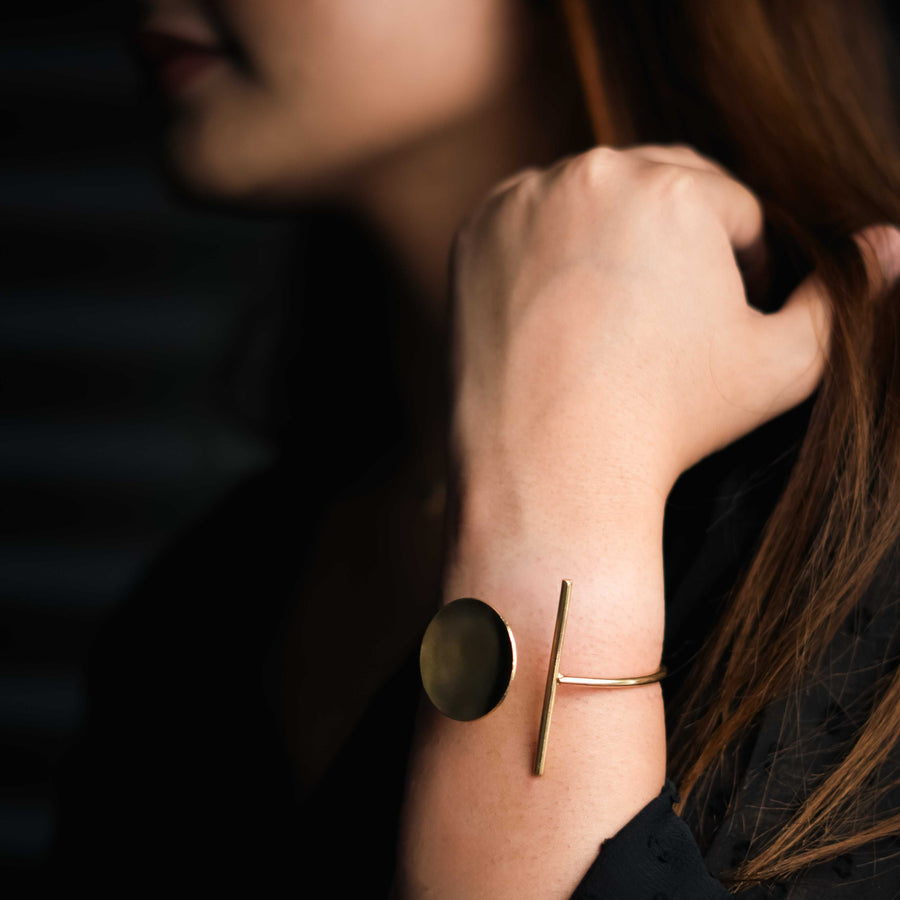
| Vintage Edge Brass Cuff | Brass | ₹299 |
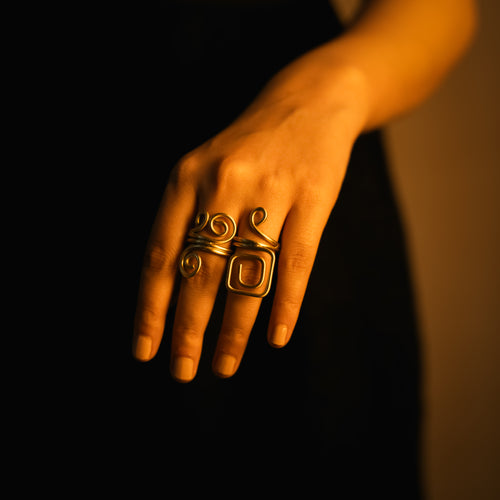
| Twin Shape Brass Adjustable Rings, Set of 2 | Brass | ₹369 |
| Minimalist Open Brass Cuff Bracelet | Brass | ₹339 |
| Geometric Adjustable Brass Cuff | Brass | ₹339 |
More to browse: rings and earrings, necklaces, bracelets, brass bangles, beaded earrings, best sellers and new arrivals. Our FAQ page covers materials and care.
Why Does Jewellery Turn Skin Green: FAQs
Why does jewellery turn my skin green?
Copper in the metal reacts with sweat, soap or lotion and leaves a green film on your skin. Brass is a copper and zinc alloy, and many gold-tone or plated pieces have copper underneath. The reaction varies by day, which is why a piece can mark you in the monsoon and not in winter. Wipe it dry after wearing and put on perfume and lotion before the jewellery.
Is it harmful when jewellery turns your skin green?
Generally no. Genesis HealthCare System, quoting Nebraska Medicine, says the reaction is not dangerous, and our anti-tarnish guide cites Halstead saying the mark fades within days. A green stain is different from an allergy. If you have itching, redness, blistering or a rash that keeps returning, take the piece off and see a dermatologist.
Does brass jewellery turn your skin green?
It can. Brass is an alloy of copper and zinc, and the copper is what reacts. Our brass pieces carry a protective lacquer according to our FAQ, which slows the reaction, but brass is not anti-tarnish and darkens once the coating wears. The first marks usually show on the inside of the band. Keep brass dry and wear it on cooler days.
Does stainless steel turn skin green?
Much less often. Stainless steel is an iron alloy, and the green mark comes from copper, so there is less to react with sweat. On golden-colour steel pieces the colour layer can still wear where it rubs, and we offer no colour warranty. Steel suits daily rings and hoops, such as the stainless steel collection pieces from ₹419.
Does resin or wooden jewellery turn skin green?
A resin or wooden bangle has no exposed metal, so there's nothing on it to turn green. Check any metal parts such as clasps, hooks and extension chains, because those can still react. The Sapphire Tide Necklace, for example, has resin beads with alloy hardware. For a bangle with nothing to react, choose resin or wood.
How do you stop jewellery turning your skin green?
Put perfume, sunscreen and lotion on first and let them dry. Wipe each piece with a soft cloth after wearing, store it dry in a pouch, and avoid brass on sweaty days. Clear nail polish on the inner band is a temporary barrier that needs re-applying often. Switching to stainless steel, resin or wood is the longer-lasting fix.
How do you get the green off your skin?
Wash the area with soap and water. The mark is a surface film and usually fades within a few days. Avoid scrubbing hard or using harsh chemicals on skin. If the skin is red, sore or swollen, don't treat it as a stain. Take the piece off and ask a doctor, because that points to irritation or an allergy.
Is green skin a sign of real or fake jewellery?
Not reliably. Green skin tells you there is copper in the piece or under its finish and that your skin reacted. It doesn't say whether the jewellery is genuine. Some plated and costume pieces mark skin, and the same metal on a different day may not. Ask for the base metal and judge the material, not the label.
Can anti-tarnish jewellery turn skin green?
It can, depending on the type. Anti-tarnish means tarnish-resistant, not tarnish-proof. Coated brass can start marking once its coating wears, while stainless steel and resin resist it far better. Ask what the base metal is and read the material line on the product page. Our anti-tarnish guide explains the three routes in detail.
Pick a Material Before You Pick a Colour
If green fingers have put you off, start with the stainless steel collection, then browse resin bangles and earrings.
And if you love brass anyway, so do we. Just keep it dry.


