


 Best seller
 Trending

Hashtack Journaljump rings
How to Tell if Dainty Jewellery Is Good Quality: What to Check Before You Buy
In this article16
Thin does not mean weak. Nine checks for clasps, jump rings, plating and price, plus a five-minute test you can run on any dainty bracelet, necklace or anklet.
Updated October 2026 · 12 min read · By the Hashtack team, Noida
To tell if dainty jewellery is good quality, check five things before you pay: how the clasp closes, whether every jump ring and link is shut, what the finish is made of, how the piece feels in your hand, and what the seller promises if it arrives damaged. Thin does not mean weak. A fine chain with a proper clasp can outlast a chunky one held together with glue.
We make and sell dainty bracelets, necklaces and anklets from Noida, mostly between ₹229 and ₹429, so this is the guide we would send a friend who messaged us before ordering. It works for any seller, including us. Where our own pieces have limits, we say so.
The Short Version: nine checks for good-quality dainty jewellery
Good-quality dainty jewellery has a clasp that closes with a firm click, jump rings with no visible gap, a finish that matches what the listing says it is, and enough weight to feel like metal rather than foil. Those four checks catch most bad pieces before you wear them. The rest of this guide shows you how to run them online and at home.
Here are the nine checks, in the order we would run them:
- Read the material first. "Brass with a gold-tone finish" or "glass beads on stretch cord" is more trustworthy than "premium quality".
- Look at the close-up, not the lifestyle shot. You want the clasp and the links in focus.
- Test the clasp. It should snap shut without wobbling and stay shut under a gentle tug.
- Check the jump rings. Run a fingernail along each one. A tiny gap is where thin chains come apart.
- Ask what the finish is. Plated, tarnish-resistant and waterproof are three different claims, and plating wears first where your skin touches it most.
- Feel the weight. Light is fine. Foil-light is not.
- Inspect beads and pearls. Holes should be clean, strands finished neatly, and nothing should look glued.
- Match the price to the claim. Solid gold or silver costs far more than ₹500, so a "gold" bracelet at ₹299 is gold-tone, and that is fine if the listing says so.
- Read the damage policy. At Hashtack, a piece that arrives damaged and is reported within 48 hours is replaced, and shipping is free above ₹499.
Two honest caveats. First, dainty jewellery is delicate by design, so every thin chain needs some care, whoever sells it. Second, no checklist can tell you how a finish will behave on your skin. In a US study of 277 earrings bought in San Francisco in 2007, 85 (30.7%) contained nickel. Cheaper earrings were more likely to, but no price point reliably predicted it, so a high price is no substitute for checking.
Our rule of thumb: spend your attention on the clasp and the first link on either side of it. That is where dainty pieces fail first, and it takes ten seconds to look.
What does "good quality" actually mean for dainty jewellery?
It means the piece is built to survive the way you will wear it, not that it is made from an expensive metal. "Dainty" describes size and style: slim, light, small. It says nothing about strength.
We split quality into three parts. Construction is how the piece is put together. Finish is what sits on the surface and how long it stays there. Honesty is whether the listing tells you what you are really getting.
Price is not on that list. A ₹299 bracelet can be good quality for ₹299, and a ₹1,499 one can be poor. Price sets your expectations; it proves nothing. If you want to see the kind of range we are talking about, our dainty jewellery collection is a fair place to compare.
Is dainty jewellery durable enough for everyday wear?
Yes, if the construction is sound and you wear it sensibly. Dainty pieces cope with desk work, commutes and a long day out. They struggle with being snagged, slept in, soaked or crushed at the bottom of a bag.
A US jeweller, Robinson's, makes the same point from the fine-jewellery side: a slim profile can still be durable, and what matters is how the links are built and how the weight is spread. We agree.
For our own range, stackable bracelets, necklaces and anklets are made for daily wear. Take them off before you swim, bathe or work out. Our brass collection page says to keep pieces away from strong perfume and chemicals, and that is good advice for any thin finish. Put your chain on last, after lotion and perfume, and you will have done more for it than any care product could.
From our side of the table. A thin chain rarely snaps in the middle. It opens at a join: the jump ring beside the clasp, or the clasp itself. Stretch bracelets fail differently, because the cord slowly loses its spring after months of being pulled over a hand. So those are the two places we check first, and the two places you should check too.
How can you tell if dainty jewellery is good quality when buying online?
Read the listing like a spec sheet, then look for proof in the photos. You cannot hold the piece, so the page has to do that job for you.
Five things are worth finding before you add to cart:
- A named material. "Brass base with gold-tone finish" tells you something. "Premium alloy" does not.
- A close-up of the clasp and links, on a plain background.
- Measurements in cm: length, extension chain, bead size. For bracelets, measure your wrist with a strip of paper and compare. Many of our dainty bracelets are stretchable or adjustable, which helps on small wrists.
- A damage policy you can read in one screen. Ours: report damage within 48 hours and we replace the piece.
- Photos that are not all styled shots. If every image is a crop of a model's wrist, ask for another.
If a page does not name the base metal, message the seller and ask. A seller who cannot answer that question usually does not know. We would also read the fine print on finish claims: our anti-tarnish jewellery collection says its materials are brass and stainless steel with a gold-tone or steel finish, not solid gold or silver, and that the plating is the part that eventually wears thin. We would like every seller to write it that plainly.
How do you tell if dainty jewellery is good quality at home?
Run a six-step check on the day it arrives, in daylight, before you wear it out. It takes about five minutes.
- Hold it up to a window. Look along every link for gaps, rough joins or uneven shapes.
- Open and close the clasp five times. It should not stick, slip or feel loose.
- Give it a gentle tug, about what a strand of hair would give. A joint that opens now would have opened on your wrist.
- Drag it across a white tissue. A coloured smear means the finish is rubbing off.
- Weigh it in your hand against a piece you trust. It should feel like metal.
- Wear it for one day. Check your skin that evening. Redness, itching or a mark is information.
If it fails steps one to three, report it quickly. Hashtack replaces damaged pieces reported within 48 hours, so do not wear a piece you doubt and then raise it a month later.
One thing we do not recommend: scratching the finish with a coin or a pin to see what is underneath. You will find out, and then it is your scratch.
Is the clasp strong enough?
A good clasp closes with a clear click, keeps its shape and stays shut under a light tug. On a dainty chain it is the highest-stress part of the piece.
Lobster clasps, the small spring-loaded hooks, are the usual choice for fine chains because they close easily with one hand. Check that the spring pushes back, that the opening meets its partner cleanly, and that the ring it clips onto is fully closed. Also look at the extension chain, the short tail that adjusts the length. Its end ball or ring should be properly attached, not just sitting there.
Are the jump rings and links closed properly?
They should be. A jump ring is a tiny circle of wire, and if its ends do not meet flush, the chain is already on its way to coming apart.
Run a fingernail along the seam. A closed ring has a hairline you can barely feel; an open one has a visible gap or overlapping ends. Squeeze a few links very gently: one that flattens easily is not built for daily wear. This is the check most shoppers skip, and it predicts a broken chain better than any other.
How can you tell if it is plated, and how long will the finish last?
Most affordable dainty jewellery, ours included, is a base metal with a thin finish on top. That is normal. What matters is that the listing says so, and that you know where it will wear first.
| Label on the listing | What it usually means | What to ask |
|---|---|---|
| Gold-tone | Gold colour on a base metal, with no promise about gold content | Which base metal? |
| Gold-plated | A thin gold layer over another metal; wears first at clasps, edges and the inside of rings | How thick, and is there a coating on top? |
| Anti-tarnish or tarnish-resistant | A claim that the finish resists darkening with normal wear, not that it never wears | What is the coating, and what does the seller say about water? |
| Stainless steel | A steel alloy, a different base from brass | Is the colour plated on, or the steel's own? |
| Waterproof | A strong claim that needs specifics | Waterproof for how long, and in chlorine or salt water? |
| Solid gold or sterling silver | The real metal, priced far above fashion jewellery | Is it marked? |
Our rings and earrings collection describes 18K gold plating with a PVD (Physical Vapour Deposition) anti-tarnish coating on a brass base. Our general anti-tarnish page is blunter: pieces are tarnish-resistant with normal wear, and none is sold as waterproof. We would follow the blunter version. Treat any thin plated chain as water-sensitive, and ask for details before you trust a waterproof claim.
Now the downside. Plating wears. It is not a defect, it is how thin finishes behave, and sweat, perfume and humidity speed it up. A Delhi summer is hard on any plated chain. As a rule, the inner edge of a bracelet and the area around the clasp show wear first.
Wikipedia's entry on costume jewellery lists gold- or silver-plated brass among the common modern materials, alongside crystals, acrylic and wood. That is the category most dainty fashion pieces belong to, and there is nothing shameful about it.
What should you check on pearls, beads and stones?
Check how they are held. Beads should sit on a neatly finished strand with clean holes, and stones should be set in the metal, not dabbed on with glue.
A fashion-jewellery guide from Beautiart makes the same point: links should be smooth and sturdy, and stones should be securely set rather than glued. On pearl-style beads, look at the hole. A chipped coating around it is where peeling starts, and strands that rattle loosely against each other will not hold their shape.
Here is something in favour of beads. Our anti-tarnish jewellery under ₹499 page lists glass and resin beads, gemstone chips, shell and stretch cord, and says those materials hold their colour because they are not plated. There is no thin coating to wear through. For daily wear in humid weather, we often prefer a bead bracelet to a plated chain for that reason.
The trade-off is the cord. Pull a stretch bracelet gently and check that it springs back. If it stays long, it will be loose within weeks.
Does weight matter on a dainty piece?
A little. Weight is a rough clue to how thick the metal is, but it is not a test by itself.
A very light chain can still be fine, and a hollow link is light too but dents easily. So if you can, hold two similar pieces side by side. If you cannot, check whether the listing gives a weight in grams. When it does not, treat that as missing information rather than as a good sign.
What is a fair price for good-quality dainty jewellery in India?
For plated or tarnish-resistant fashion pieces, we think the honest zone for a single dainty bracelet, necklace or anklet is roughly ₹229 to ₹500. That is where most of our range sits.
| Type of piece | Where our featured prices sit (checked 20 October 2026) |
|---|---|
| Stackable and chain bracelets | ₹299 to ₹429 |
| Pearl and bead bracelets | ₹299 to ₹429 |
| Charm, stretch and cuff bracelets | ₹329 to ₹399 |
| Dainty necklaces | ₹229 to ₹329 |
| Anklets | ₹249 |
Our view: if a piece is described as gold and priced like fashion jewellery, it is gold-tone, and that is fine. If a piece is priced far below comparable ones, ask what has been saved. If it is priced far above, ask what you are paying for. Prices change, so confirm on the product page. Orders above ₹499 ship free.
If you are comparing, look beyond bracelets too: our necklaces and chains and body chains and anklets follow the same logic.
Will dainty jewellery irritate your skin or leave marks?
It can, and that depends on your skin more than on the price tag. Nickel is the usual cause of reactions, and the evidence says price will not reliably warn you.
A study reported by Dermatology Times and published in the Journal of the American Academy of Dermatology bought 277 earrings in San Francisco in 2007. Of those, 85 (30.7%) contained nickel. Cheaper earrings were more likely to, but no price point reliably predicted it. The researchers advised allergic shoppers to look for nickel-free or hypoallergenic labels and to wear stainless steel or gold. It is an old, US-only study, so treat it as a caution, not an Indian market statistic.
We cannot promise that every dainty piece is nickel-free unless its page says so. If you know you react, tell us before you buy and we will point you to the right piece. If a piece leaves a green or dark mark on your skin, stop wearing it, wash and dry the area, and message the seller.
The practical test is the one-day wear test from earlier. It beats any claim on a label.
How do you wear and store dainty chains without breaking them?
Put them on last, take them off first, and store each one closed and flat. Most chain breakages come from being tangled, tugged or slept in.
To stop thin necklaces tangling, fasten the clasp before storing and give each one its own pouch. For travel, thread the chain through a drinking straw and fasten the clasp over the end. If one does tangle, lay it on a smooth surface and ease the knot loose with two pins, working from the outside in. Pulling only tightens it.
If a jump ring has opened, a jeweller can often close it. If a link has snapped in the middle, leave it alone and ask. If a piece from us arrives damaged, tell us within 48 hours. For routine care, see our handmade jewellery care guide.
Our honest note. Dainty will always be more fragile than chunky. If you are hard on jewellery, choose a stretch bead bracelet or a cuff over a fine chain, and keep the chain for days when you are not carrying a heavy bag or sleeping in it.
The nine-check cheat sheet
Screenshot this table and run it on any piece, from any seller, before you pay.
| Check | Good sign | Warning sign | 30-second test |
|---|---|---|---|
| 1. Material | Base metal and finish named | Only "premium" or "high quality" | Message the seller and ask |
| 2. Close-up | Clasp and links in focus | Only styled lifestyle shots | Zoom the photo to 200% |
| 3. Clasp | Clear click, stays shut | Wobbles or slides open | Open and close it five times |
| 4. Jump rings | Flush seam | Visible gap or overlap | Run a fingernail along the seam |
| 5. Finish | Even colour, no flaking | Smears on tissue | Drag it across a white tissue |
| 6. Weight | Feels like metal | Foil-light, bends easily | Compare with a piece you trust |
| 7. Beads and stones | Clean holes, set stones | Glue marks, loose rattle | Look at the holes under a torch |
| 8. Price | Matches the claim | "Gold" far under comparable pieces | Compare three similar listings |
| 9. Policy | Clear damage replacement | No policy, or buried in terms | Read it before you pay |
Which dainty pieces should you look at first?
Here are 24 pieces from the range, grouped by what they do best. Prices were checked on 20 October 2026, so confirm on the product page. You can also browse the whole dainty jewellery range, our bracelets, and adjustable bracelets.
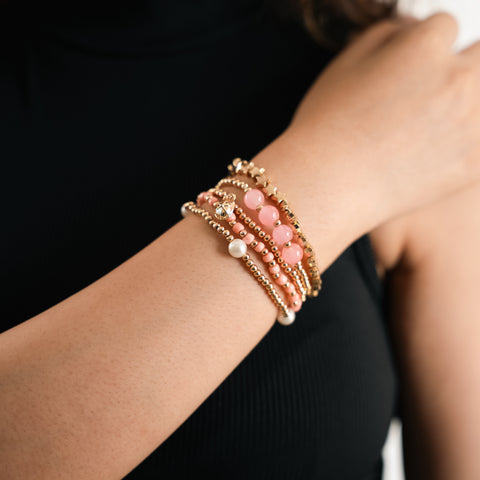
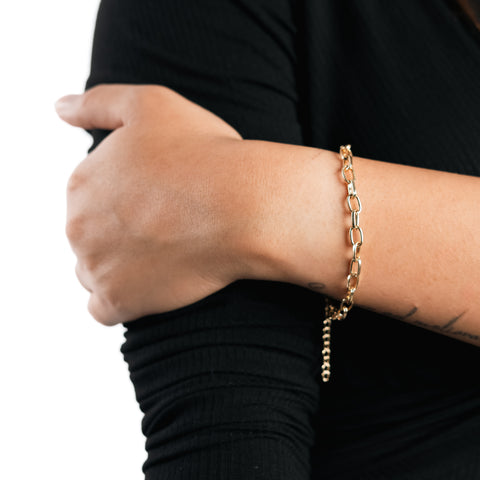
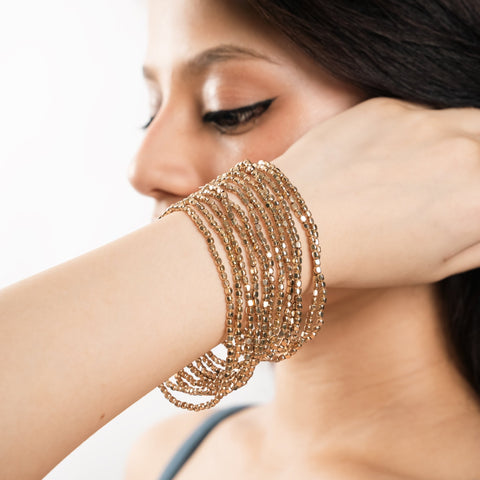
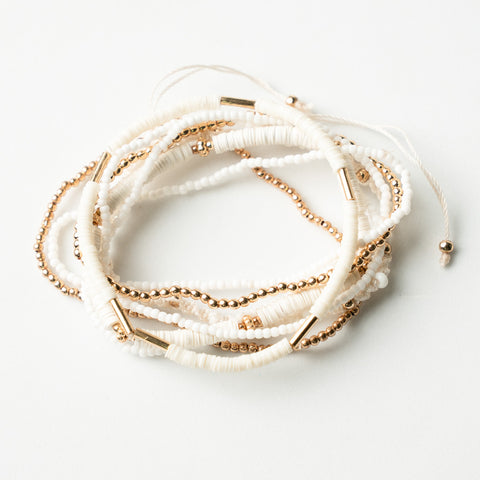
Slim stackable and chain bracelets, good for layering
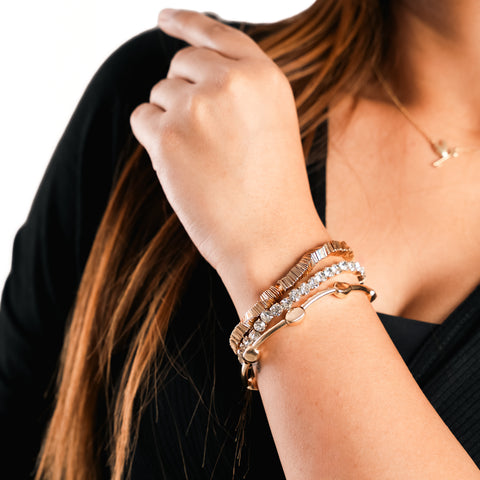
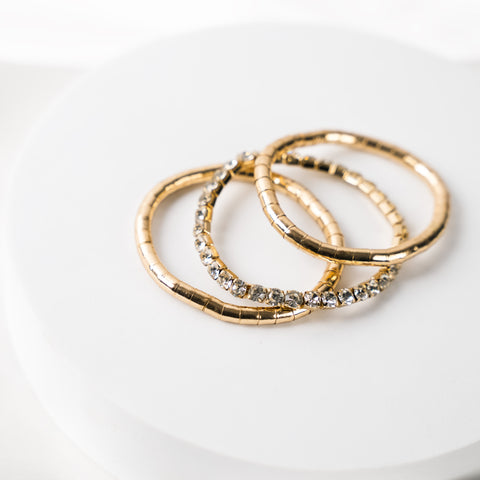
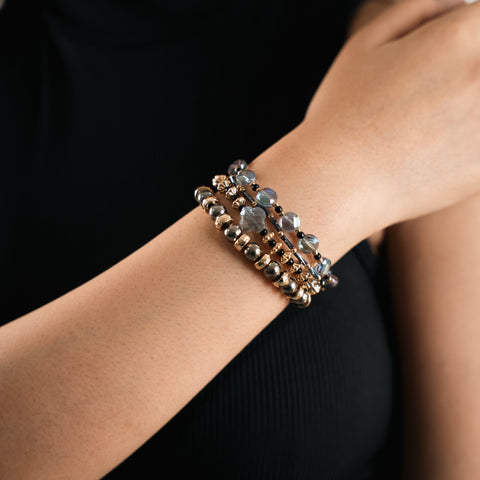
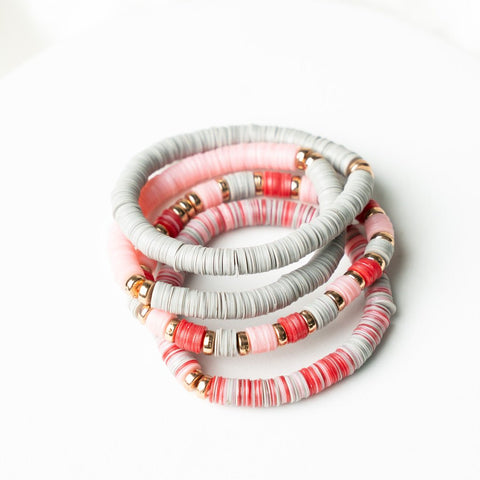
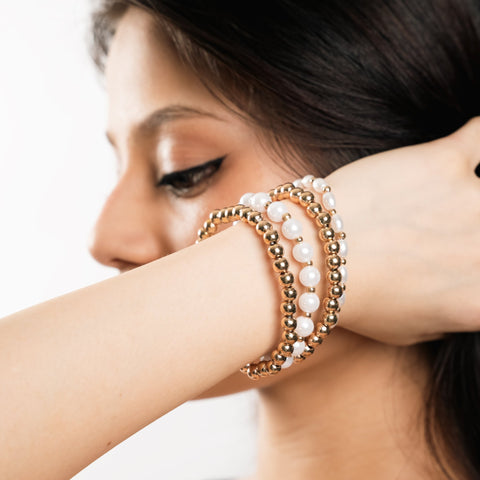
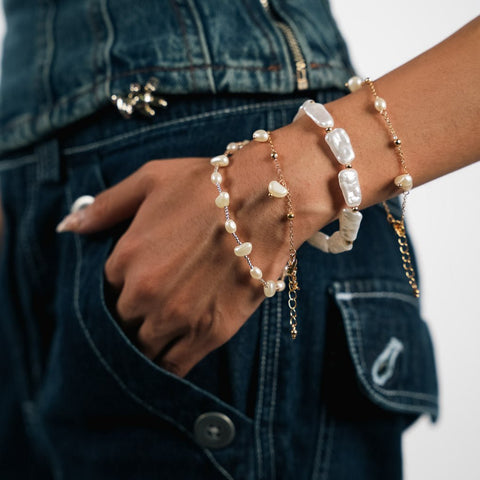
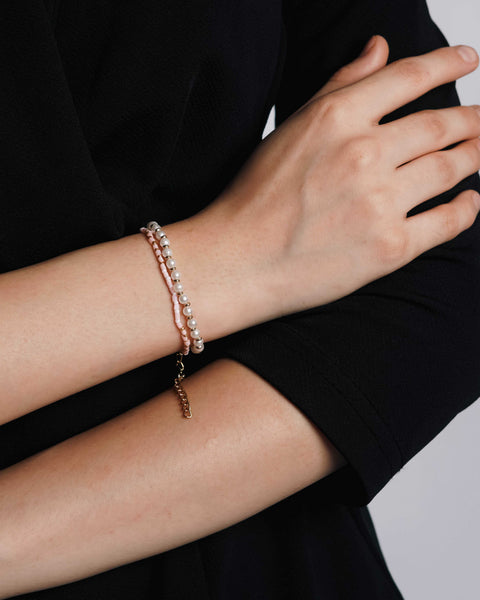
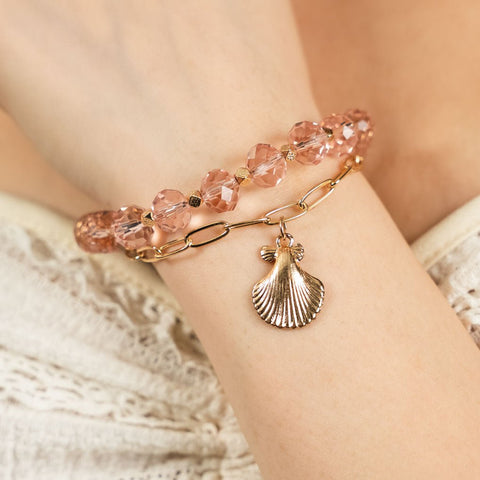
Pearl and bead bracelets, no thin plating to wear through
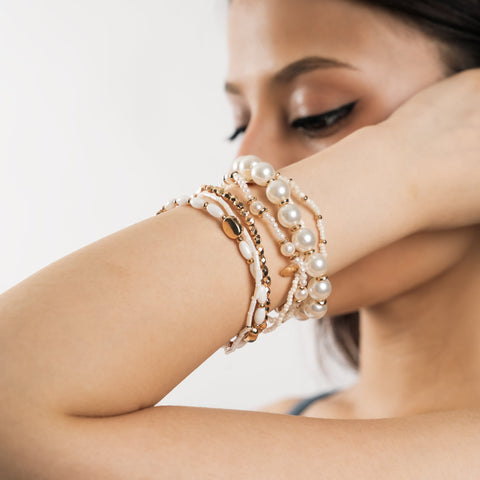
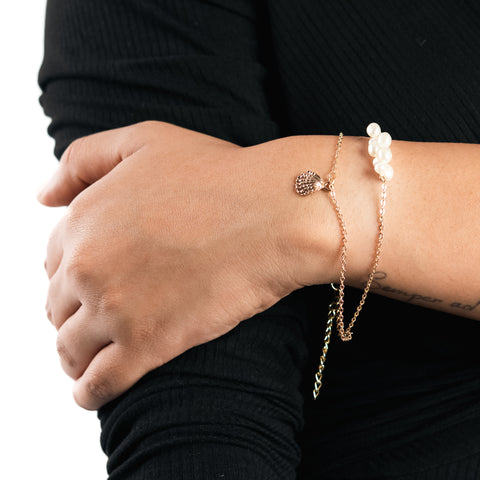
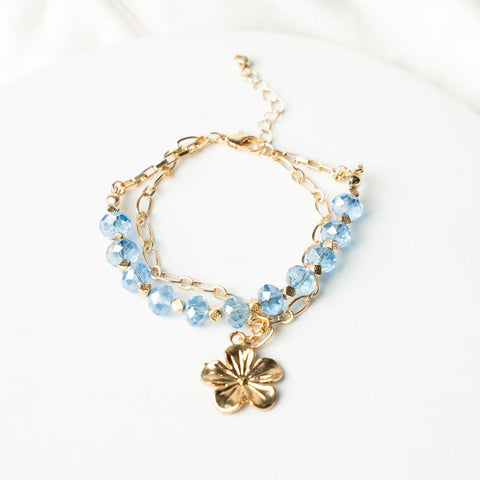
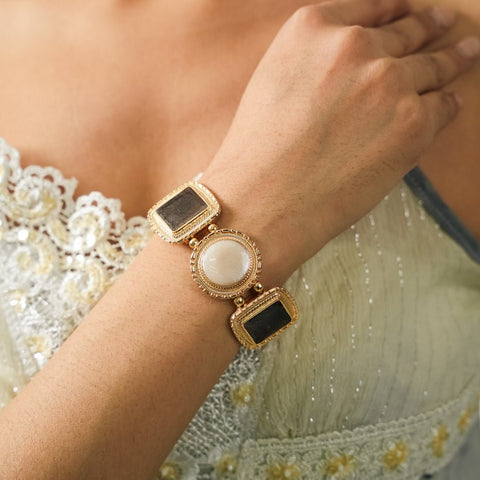
Charm, stretch and cuff styles, more structure than a chain
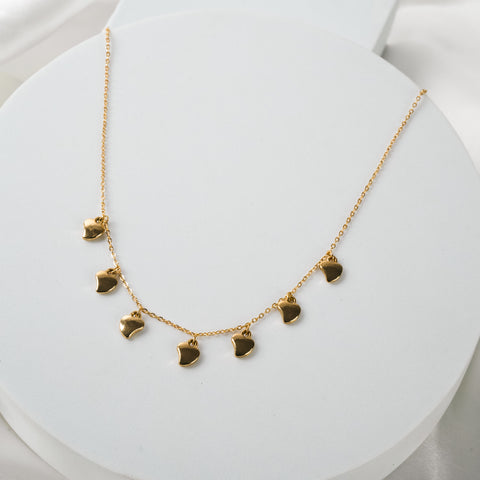
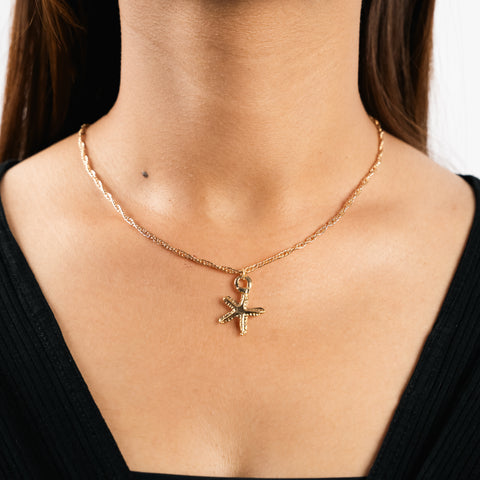
Dainty necklaces and anklets
More in our necklace collection.
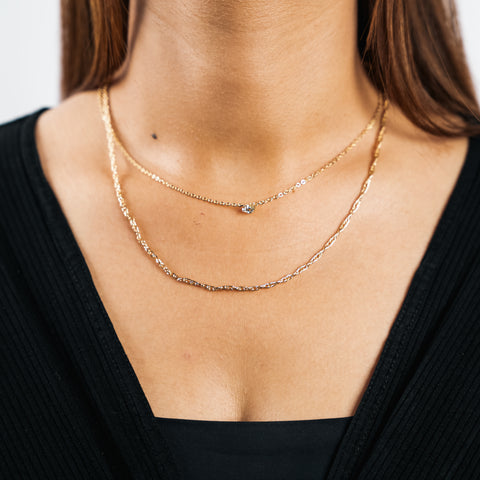
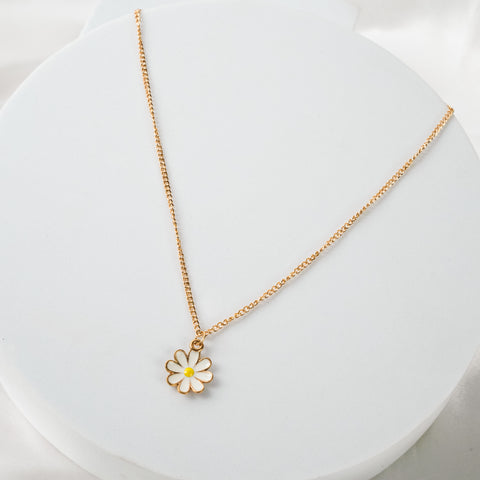
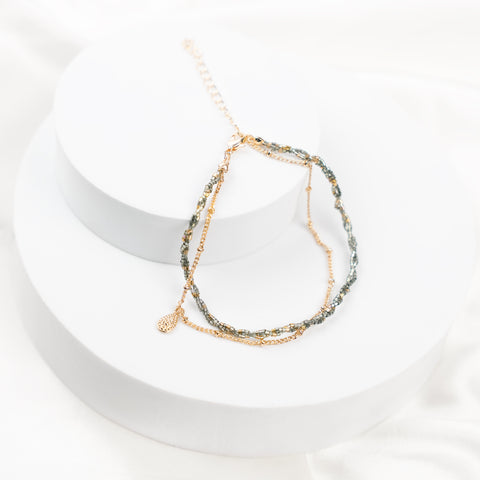
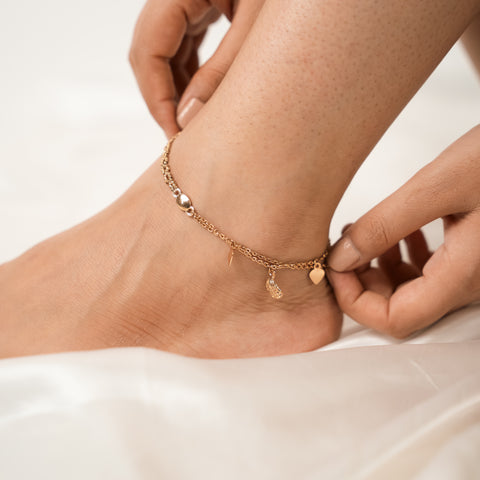
Looking for the pieces customers buy most? See our best sellers and new arrivals. For styling ideas, our guides to styling handmade jewellery and bracelets for women in India go further.
Frequently asked questions about dainty jewellery quality
How can you tell if jewellery is high quality?
Check construction first: a clasp that closes with a click, jump rings with no gap, links that are smooth and evenly shaped, and stones that are set rather than glued. Then check the finish by dragging the piece across a white tissue, and the weight by comparing it with a piece you trust. Finally, read the listing: it should name the base metal and finish. High price alone does not guarantee quality, as the nickel study above shows. For a fast routine, use the nine-check cheat sheet in this guide.
Is simple and dainty jewellery good quality?
It can be, but "simple and dainty" describes the look, not the build. Slim chains are only as good as their clasps, joins and finish. A well-made dainty piece is light, flexible and sturdy at the points that matter. A badly made one has open jump rings, a stiff or loose clasp, and a finish that smears. Judge each piece on those details instead of on how delicate it looks. Brands that name their materials plainly are usually easier to trust.
What are some good-quality dainty jewellery options?
Start with pieces that have simple, sturdy construction: stackable bracelets with studs or links, pearl and bead bracelets on stretch cord, and short dainty necklaces with proper clasps. From our range, the Golden Edge Stud Stackable Bracelet, the Celeste Pearl Bracelet and the Shimmerleaf Dainty Necklace are a good start. Browse the full dainty collection and run the checks in this guide on anything you like.
What does dainty mean in jewellery?
Dainty means fine, slim, light and small in scale: thin chains, tiny charms, narrow bands. It is a description of size and style, not of material or strength. A dainty necklace can be brass with a gold-tone finish, stainless steel, or solid gold. That is why two dainty pieces at very different prices can look alike, and why it is worth reading the material and checking the build before you buy.
How is dainty jewellery different from minimalist jewellery?
Dainty is about scale: slim and light. Minimalist is about design: clean, uncluttered, with few details. The two overlap often, but not always. A minimalist cuff can be wide and heavy, and a dainty bracelet can carry several tiny charms. If you are shopping for everyday wear, think about which quality you want: delicate and light, or plain and structured. Then judge each piece on construction, finish and fit.
Can you shower or sleep in dainty jewellery?
We would not. Even with an anti-tarnish finish, thin plated chains are water-sensitive, and our own anti-tarnish page says none of our pieces is sold as waterproof. Soap, shampoo and perfume wear finishes faster, and sleeping tangles and stretches chains. Take pieces off before showers, swimming and workouts, and before bed. If a seller claims a piece is waterproof, ask for details on how long, in what water, and whether the claim covers the clasp.
How do you stop thin necklace chains from tangling?
Fasten the clasp before you store a chain, and keep each necklace in its own pouch or compartment. For travel, thread the chain through a drinking straw and fasten the clasp over the end. If a chain has tangled, lay it on a smooth surface and use two pins to loosen the knot from the outside in. Pulling will tighten it. Shorter chains tangle less, so choose a shorter length if you wear your chain every day.
What is the 2:1:1 rule in jewellery?
It is a styling rule, not a quality test. According to a Ritani guide, you choose two pieces from one category, one from a second and one from a third, such as two rings on one hand, one ring on the other and a bracelet. Keep the metals and styles consistent, and spread the pieces out rather than stacking them in one spot.
Ready to run the checks on a piece you like?
Every Hashtack product page lists its price, and orders above ₹499 ship free from Noida.
Shop dainty jewellery Shop necklaces


