


 Best seller
 Trending






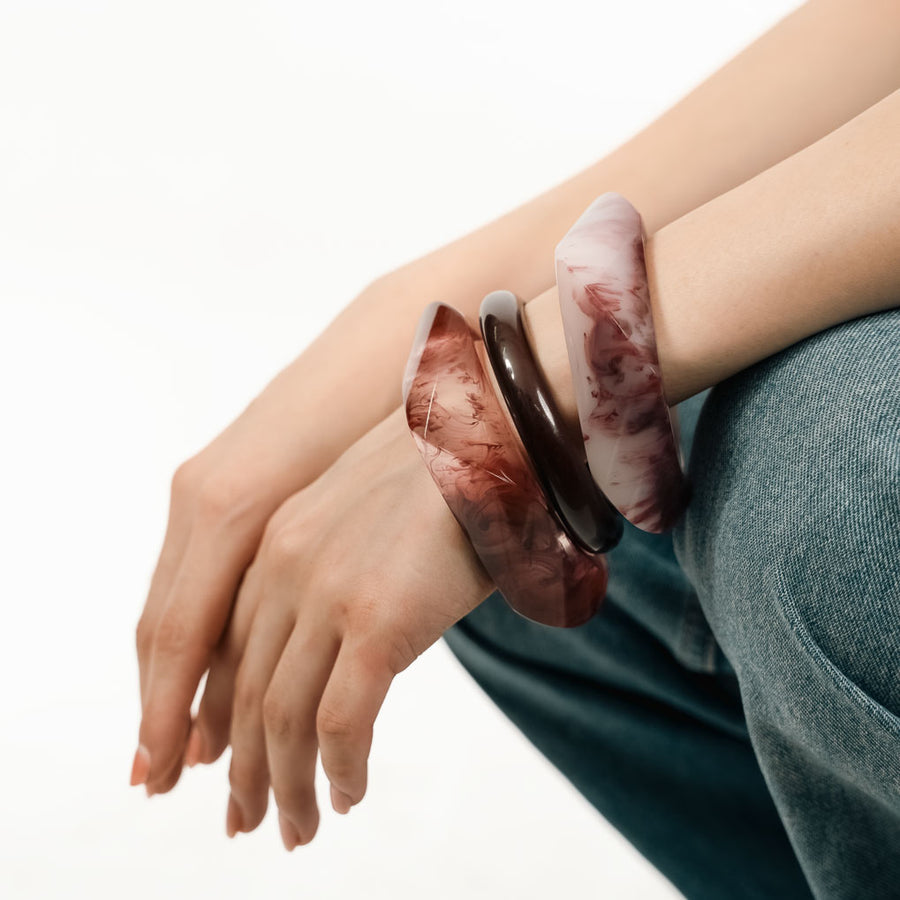

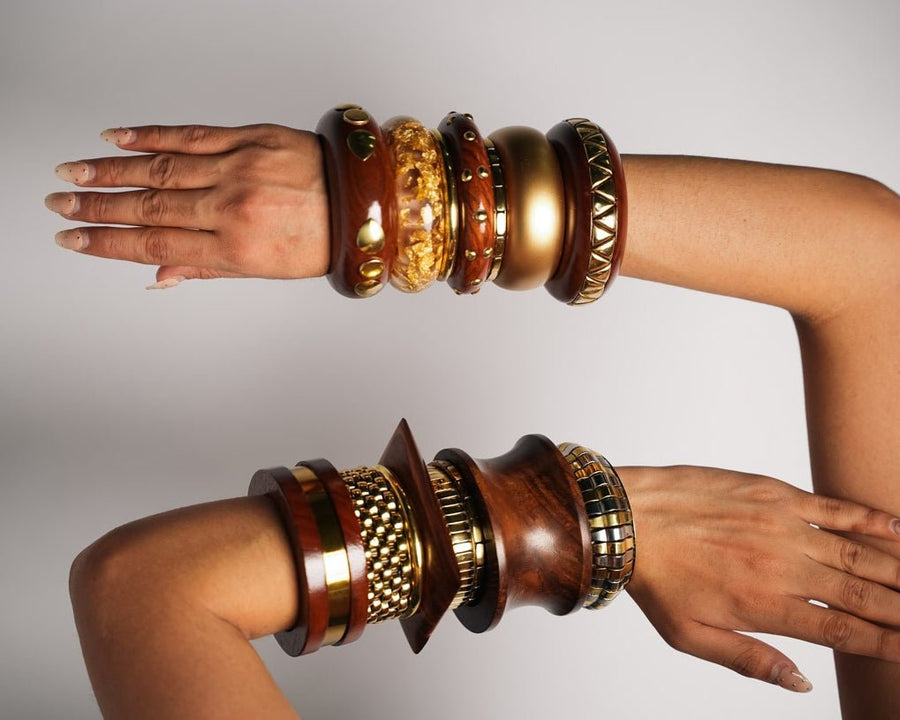
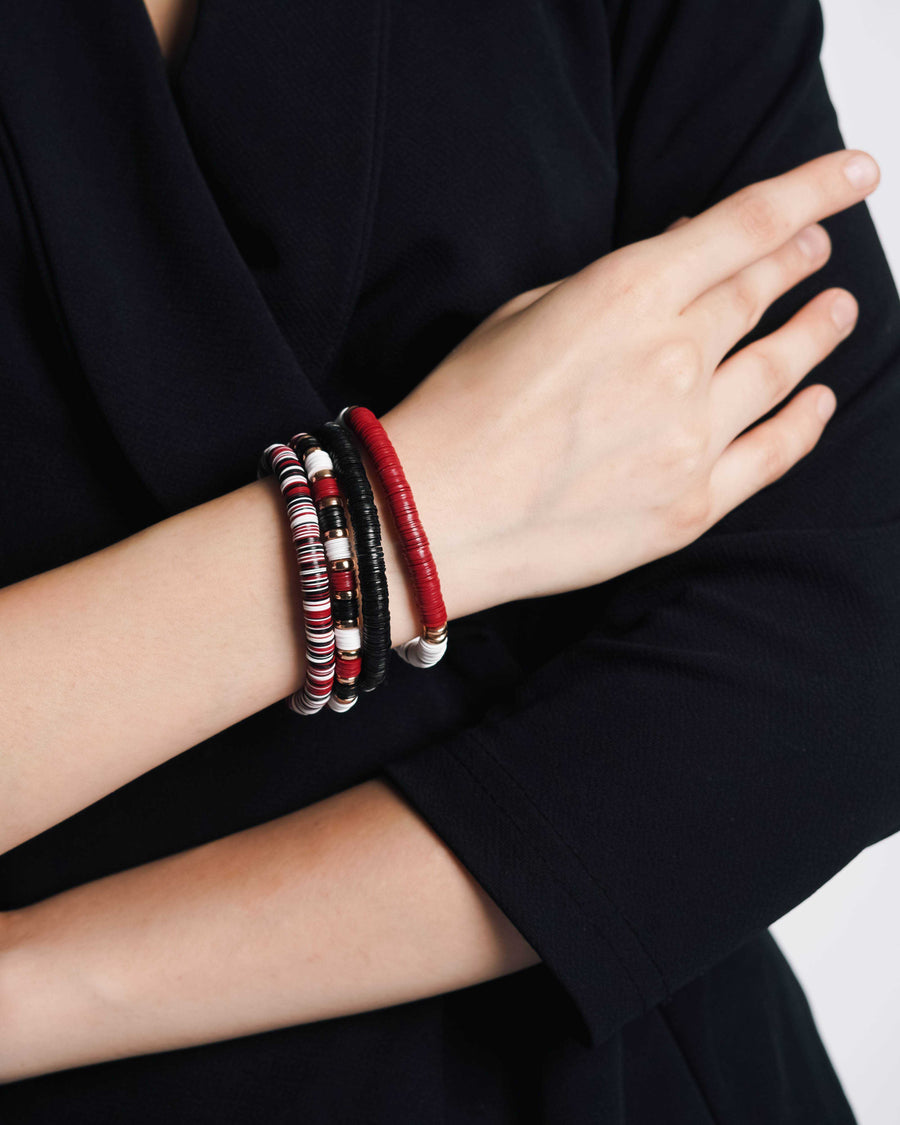
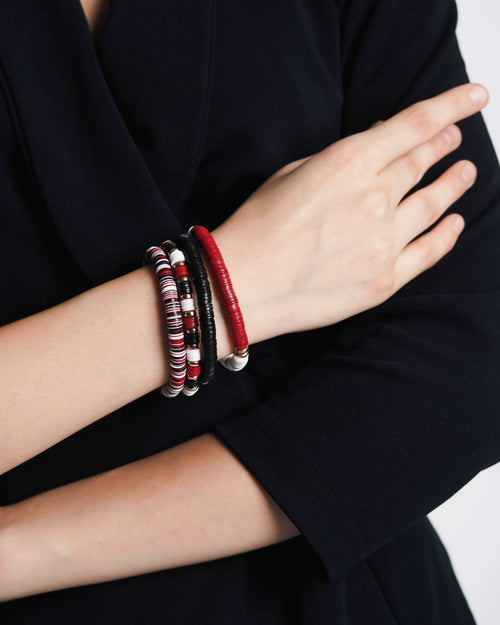









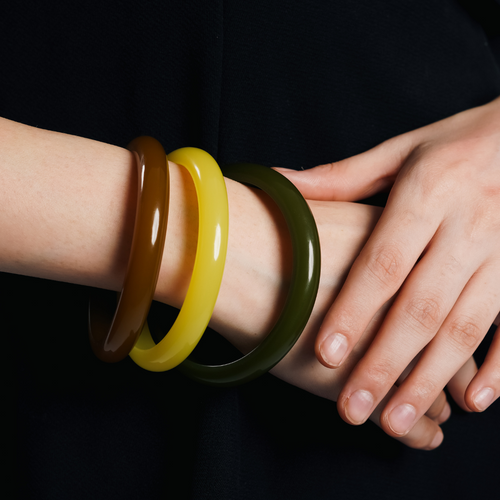

Hashtack Journalare resin bangles in style
What Are Resin Bangles Made Of? Resin vs Acrylic, Lac & Plastic
In this article10
Wondering what resin bangles are actually made of? We break down liquid casting resin, compare it against cheap moulded plastic, Punjabi acrylic, and Rajasthani lac, and share how it holds up to Indian heat.
The fastest way to understand what a resin bangle is made of: it is liquid jewellery cured into a permanent solid. High-quality resin bangles are formed from a two-part thermosetting polymer liquid that hardens through a chemical reaction inside custom silicone moulds. They are not stamped from cheap plastic sheets, nor are they melted down from factory polystyrene pellets.
If you have ever picked up a chunky bangle at a local market only to find it felt like an empty hollow bottle cap, you know the disappointment of bad plastics. Fine resin is the direct opposite. It carries comfortable physical weight, a cool glass-like touch when you first slide it over your knuckles, and rich colour swirls suspended through the entire depth of the piece.
The Short Version
Resin bangles are crafted from high-grade liquid synthetic resin—typically a two-part epoxy or polyurethane polymer—that is hand-poured into silicone moulds, cured until solid, and finished with abrasive polishing wheels. They are not mass-produced thermo-moulded plastic. While ordinary plastics soften under high temperatures, cured casting resin forms a cross-linked thermoset bond. That chemical bond gives resin its signature glass-like gloss, smooth weight, and resistance to softening during a 42°C Delhi heatwave.
Compared to traditional Indian bangles, resin occupies a sweet spot between fragility and durability. Unlike Rajasthani lac bangles, which soften near cooking fires and crack when squeezed, resin keeps its rigid structure permanently. Unlike glass choodiyan, resin will not shatter into dangerous shards if your wrist hits a metal car door or desktop. Compared to injection-moulded acrylic or cheap polystyrene bangles found at local weekly bazaars, cured resin offers double the tensile density, deeper colour suspension, and seamless hand-polished edges that never leave mould-seam scratches on your skin.
However, resin has real physical boundaries you should understand before buying. It is not indestructible metal. Dropping a thick resin bangle from standing height onto bare vitrified tile or marble flooring can chip sharp edges. Direct contact with acetone, alcohol-based sanitisers, and heavy perfumes will dissolve the polished exterior, creating cloudy matte blotches. Furthermore, extended exposure to intense UV rays can cause transparent clear resins to develop a faint amber hue over twelve to eighteen months.
Expect handcrafted resin bangles to weigh between 24 and 45 grams per piece, offering substantial presence without wrist fatigue. At Hashtack, our designs run from ₹399 for single moulded cuffs up to ₹1,499 for curated five-piece hand-poured stacks. They deliver contemporary artistic flair for casual workwear and relaxed resort outings without the allergic reactions or skin-greening tarnishing common to low-grade brass or nickel costume jewellery.
What Is Resin Jewellery Actually Made Of?
Resin jewellery is made by blending liquid resin base with a curing agent or hardener in precise mathematical ratios. In our Noida workshop, casting involves liquid epoxy or polyurethane polymers combined with rich liquid pigments, metallic foils, mica powders, or natural botanical elements. Once stirred, the compound undergoes an exothermic curing reaction, transforming from a honey-like liquid into an ultra-dense, rigid solid over 24 to 48 hours.
Because the material cures inside individual silicone moulds rather than running through industrial high-pressure injection nozzles, every single piece develops its own distinctive internal swirls. No two resin pours settle in the exact same pattern. After curing, craftsmen wet-sand each bangle through six descending grit levels—from coarse 400 grit down to ultra-fine 3000 grit—before applying a final buffing wheel to produce an optical mirror finish.
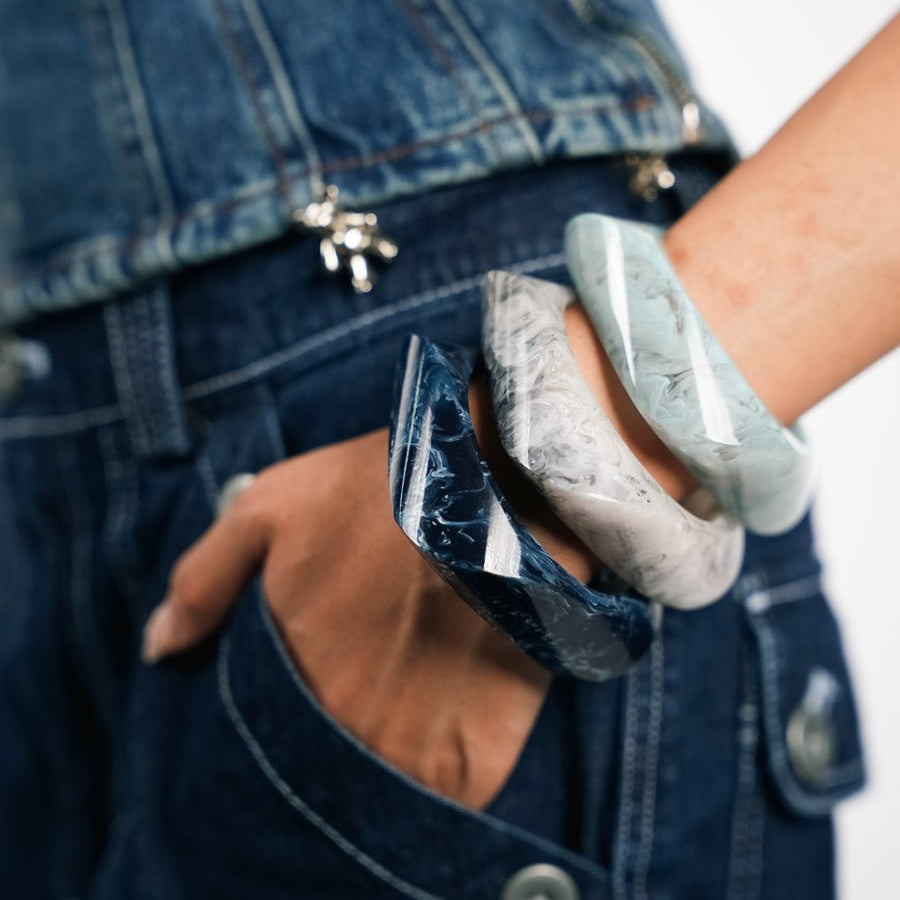
Our Ocean Mist Sculpted Resin Bangles (₹899) showcase this precise casting technique. Seafoam, deep navy, and white liquid resins are poured together directly in the mould, freezing marine currents into an angular silhouette.
Is Resin Just Fancy Plastic?
Chemically speaking, resin belongs to the broader polymer family, but calling artisan casting resin "ordinary plastic" is like calling fine bone china a terracotta brick. The crucial technical difference lies in their molecular structure under thermal stress: thermoplastics versus thermoset polymers.
Everyday cheap plastics—like polyethylene takeaway cups or cheap acrylic bangles—are thermoplastics. Their polymer chains sit in loose parallel strands. When heated, these strands slide past one another, causing the plastic to soften, bend, or warp. By contrast, jewellery-grade casting resin forms irreversible covalent cross-links during curing. Once cured, it cannot be melted back down or reshaped. If exposed to extreme heat, it will char rather than liquefy.
This cross-linked density explains why our resin bangles collection feels solid and cool to the skin. You do not get the cheap hollow rattle of toy plastic when two resin bangles knock together on your wrist. Instead, they produce a crisp, muted chime closer to carved hardwood or smooth river stone.
Resin vs Acrylic, Lac and Glass Bangles: The Direct Comparison
Indian women have worn bangles crafted from clay, shell, lac, glass, and metals for centuries. Understanding where modern resin sits against these traditional materials helps you choose the right accessory for your wardrobe and climate.
| Material | Composition | Weight per Bangle | Heat & Sweat Tolerance | Drop Impact Resistance |
|---|---|---|---|---|
| Cast Resin | Thermosetting polymer (Epoxy/Polyurethane) | 24g – 45g (Substantial) | High (Unaffected by humidity/sweat) | Moderate (May chip on stone floors) |
| Moulded Acrylic | Polymethyl methacrylate (Thermoplastic) | 12g – 20g (Very light) | Medium (Softens in direct sun/cars) | High (Flexible, bounces easily) |
| Rajasthani Lac | Natural insect resin + chalk powder | 35g – 60g (Heavy) | Poor (Softens near heat or flame) | Very Low (Cracks or fractures easily) |
| Traditional Glass | Silica soda-lime compound | 8g – 15g (Thin, brittle) | Immune to heat and moisture | Extremely Fragile (Shatters sharply) |
When you contrast these options, resin bridges the gap between delicate artisanal beauty and real-world durability. For shoppers who love organic warmth alongside resin, our handcrafted wooden bangles offer a similar earthy heft with zero risk of breakage.
Popular styles to explore include the deep berry-toned Amara Bold Bangles (₹699), the tortoiseshell Retro Chic Bangles (₹549), and the smooth natural Wooden Aura Bangles (₹799).
Do Resin Bangles Break When Dropped?
Yes, resin bangles can chip or snap under specific blunt-force impacts. While resin is shatter-resistant compared to fragile glass, it is not flexible silicone or bulletproof metal. If a chunky resin bangle slips from your fingers while changing in a bathroom and strikes hard ceramic tile, an edge can fracture.
The fracture risk depends entirely on the bangle profile. Broad, curved silhouettes like our Bold Resin Bangles absorb drops far better than razor-sharp angular geometries. If you drop resin on carpet, laminate, or wooden flooring, it bounces without harm. But treat your resin jewellery with the same consideration you give a beloved pair of luxury sunglasses.
Will Resin Bangles Turn Yellow in Indian Summers?
Modern UV-stabilised epoxy resins resist yellowing for years under normal indoor and outdoor wear. However, unpigmented clear resin can slowly develop a warm champagne tint if stored on a sunny windowsill through months of intense UV exposure. The chemical driver behind yellowing is photo-oxidation, where high-energy ultraviolet radiation breaks polymer cross-links.
To combat this, quality pieces like our Crystal Geometry Bangles incorporate optical hindered amine light stabilisers (HALS). Coloured, marbled, or opaque stacks—such as our deep burgundy Vintage Merlot Bangle Stack or earthy Desert Muse Bangles—completely bypass this concern because concentrated pigment suspensions block UV light from penetrating into the polymer core.
Experience Block: What We Learned Testing Stacks in Delhi Humidity
During peak June testing in our Noida workshop, where ambient temperatures regularly cross 43°C with heavy monsoon humidity, we observed how different materials responded to real skin contact. Cheap painted alloy bangles corroded and left grey rings on sweaty forearms within ninety minutes. Traditional lac bangles softened slightly when left in a parked car glovebox, fusing two bangles together at the rim.
Our cured resin bangles remained completely unaffected by body perspiration, humidity, and atmospheric heat. The only vulnerability we uncovered? Alcohol hand sanitiser. One tester sprayed hospital-grade sanitiser directly onto her hands while wearing an opaque cuff; the overspray instantly stripped the glossy polish, leaving a dull milky film on the surface. We now explicitly advise all our customers: slip your resin bangles on after your sanitiser and perfume have fully dried.
How Heavy Do Resin Bangles Feel on the Wrist?
A standard single resin bangle weighs approximately 28 to 36 grams, depending on whether it is sculpted or minimalist. By comparison, a solid brass cuff of the same physical dimensions weighs over 85 grams, quickly causing forearm fatigue during long office days.
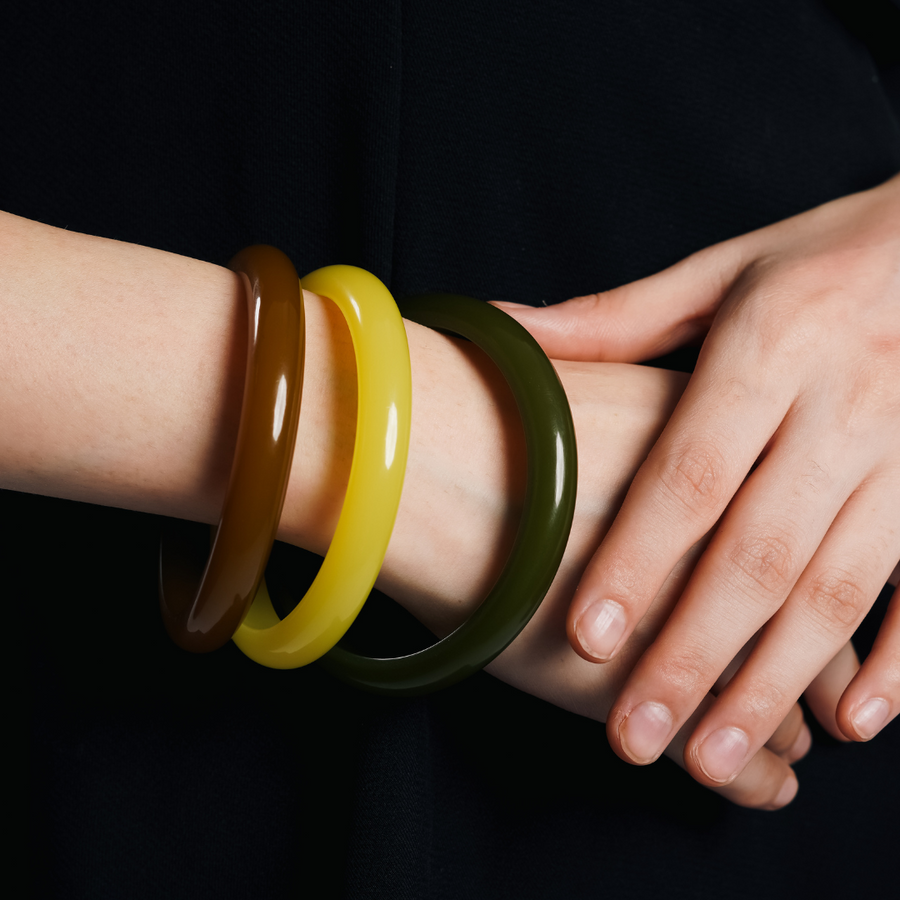
This balanced density makes resin the premier medium for chunky fashion. You can stack three bold pieces—such as our Trio Bold Resin Bangle Set (₹499)—achieving a three-inch wide profile on your arm while keeping the total weight under 100 grams. You get striking visual impact without feeling weighed down during typing or driving.
How Do You Measure Your Bangle Size for Solid Resin?
Because solid resin bangles have no hinge, clasp, or elastic stretch, your hand knuckles determine your size—not your resting wrist circumference. Your hand must compress to slide through the inner diameter.
To measure accurately at home:
- Bring your thumb and pinky finger together across your palm, mimicking the exact shape your hand takes when sliding on a bangle.
- Wrap a soft tailoring tape or strip of paper around the widest knuckle line of your compressed hand.
- Mark the overlapping point with a pen and measure the flat length in millimetres.
- Compare your circumference against standard Indian bangle sizing:
- Size 2.4: 57.2 mm inner diameter (180 mm knuckle circumference)
- Size 2.6: 60.3 mm inner diameter (190 mm knuckle circumference)
- Size 2.8: 63.5 mm inner diameter (200 mm knuckle circumference)
Most of our curated collections, including the best-selling Pearl Ash Bangles and Espresso Éclat Bangles, are crafted in standard 2.6 and 2.8 sizing. If you sit between two sizes, always select the larger dimension. Resin will not stretch, and forcing a tight bangle over your thumb joints risks bruising your knuckles.
Can You Mix Resin Bangles with Brass and Gold-Tone Jewellery?
Yes. Combining organic cured resin with warm metallic finishes creates depth and visual balance. Pairing a high-shine gold-tone brass piece from our Golden Brass Theory collection alongside an earthy marbled resin bangle grounds your look for both ethnic and western attire.
For instance, framing our studded Onyx Aurelia Bangle (₹1,299) between our open Vintage Edge Brass Cuff (₹299) and a waterproof band like the Solstice Ribbed Cuff (₹1,199) from our No Tarnish Club breaks up solid colours with clean metallic contrast. If you prefer classic wristwear, explore our bangles and bracelets edit to match textures.
Experience Block: The Polishing Cloth Fix for Scratched Resin
Over months of daily wear, resin bangles naturally pick up microscopic surface abrasions from laptop desks, car steering wheels, and granite kitchen countertops. When your bangle looks slightly foggy after a busy season, do not discard it or try household glass cleaners.
Take a microfibre jewellery cloth with a tiny dab of plain white non-gel toothpaste or automotive plastic polishing compound. Rub the scuffed area in small concentric circles for two minutes using moderate thumb pressure. Rinse thoroughly with lukewarm tap water and wipe dry with a lint-free cotton cloth. The micro-abrasives polish out shallow hairline scratches, restoring the high-gloss shine without compromising the underlying design.
How to Care for and Store Your Resin Bangles
Caring for handcrafted resin jewellery requires minimal effort, provided you avoid chemical solvents. Follow these five practical maintenance guidelines:
- Keep away from acetone and alcohol: Never wear resin bangles while applying nail polish remover, hairspray, or alcohol sanitisers. Solvents dissolve cured resins, leaving permanent cloudy spots.
- Clean with mild soapy water: Wash accumulated body oils and sweat away with lukewarm water and a drop of pH-neutral liquid dish soap. Pat dry with a soft towel.
- Store flat in soft pouches: Avoid tossing resin pieces loose into a wire jewellery tray. Store each stack inside individual drawstring pouches from our accessories collection to prevent surface scratching from metal clasps.
- Avoid direct radiator or car heat: While resin will not liquefy, prolonged exposure to temperatures above 60°C inside locked cars can cause subtle warping over time.
- Protect from sharp impacts: Put your bangles on over a soft bed or rug rather than hard bathroom tiles so accidental drops land safely.
Whether you choose our rich Crimson Nocturne Bangles, modern Ivory Éclat Bangle, or natural tones from our best sellers collection, each piece ships with protective padding across India. Orders above ₹499 qualify for free doorstep delivery.
Frequently Asked Questions About Resin Bangles
Are resin bangles safe for sensitive skin?
Yes, fully cured resin bangles are completely hypoallergenic and safe for sensitive skin. Unlike low-cost metal costume jewellery that leaches nickel, copper, or lead salts into your pores when you sweat, cured epoxy polymer is biologically inert. It will not cause contact dermatitis, allergic redness, or green skin discolouration, making it a reliable option for warm, humid Indian weather.
Can resin bangles get wet in the shower or rain?
Resin bangles are 100% waterproof and will not dissolve, swell, or disintegrate if exposed to plain rain or shower water. However, bath soaps, body washes, and warm water can gradually build up a thin film over the polished exterior, dulling its glass-like shine. We recommend slipping your bangles off before showering and patting them completely dry with a soft cloth if you get caught in a downpour.
Why are handmade resin bangles more expensive than plastic bangles?
Handmade resin bangles command a higher price than machine-made plastic because of their intensive production process. Mass-market plastic bangles are injection-moulded in thousands per hour from cheap synthetic pellets. Handcrafted resin bangles are mixed by hand, cured over 24 to 48 hours in silicone moulds, and individually wet-sanded and polished on buffing wheels by artisans, ensuring unique marbled patterns and superior durability.
How do you fix cloudy or dull spots on a resin bangle?
Cloudy patches caused by mild abrasion or cosmetic contact can be repaired at home without specialised tools. Apply a small pea-sized amount of non-gel white toothpaste or plastic polishing compound to a microfibre cloth. Buff the cloudy area in firm circular motions for two minutes, rinse thoroughly with cool water, and buff dry. For deep surface scratches, rub gently with 2000-grit wet sandpaper before applying polish.
Can resin bangles be resized or stretched if they are too small?
No, cured thermoset resin bangles cannot be stretched, resized, or expanded. Unlike thermoplastics that soften when heated, thermoset polymers have locked chemical cross-links; attempting to heat or stretch them with a hair dryer will only burn or crack the piece. Always verify your hand knuckle circumference before ordering to ensure you choose the correct internal diameter.
Do resin bangles melt if left near a kitchen gas stove?
Resin bangles will not melt into liquid like wax or lac bangles, but direct heat above 80°C will ruin them. Exposure to open gas flames or hot cookware can scorch the resin, release fumes, cause discoloration, or compromise its internal bond. Never wear your resin jewellery while working closely over open kitchen burners or handling hot baking pans.
What is the difference between resin bangles and acrylic bangles?
The primary difference lies in their chemistry and weight. Acrylic bangles are cut or moulded from thermoplastic acrylic sheets; they are lighter (12–20g), scratch more easily, and can warp under moderate vehicle heat. Resin bangles are hand-cast from thermosetting liquid polymers, weighing 24–45g with greater impact rigidity, deeper colour suspension, and seamless hand-polished edges free of industrial mould lines.
How should I store resin bangles to prevent scratches?
Store your resin bangles flat inside soft individual cotton or velvet pouches, away from sharp metal zippers and chains. Avoid storing them stacked loose in direct sunlight on vanity tables, as long-term UV rays can degrade transparent finishes. Keeping them in a cool, shaded drawer maintains their structural integrity and mirror gloss for years.


